


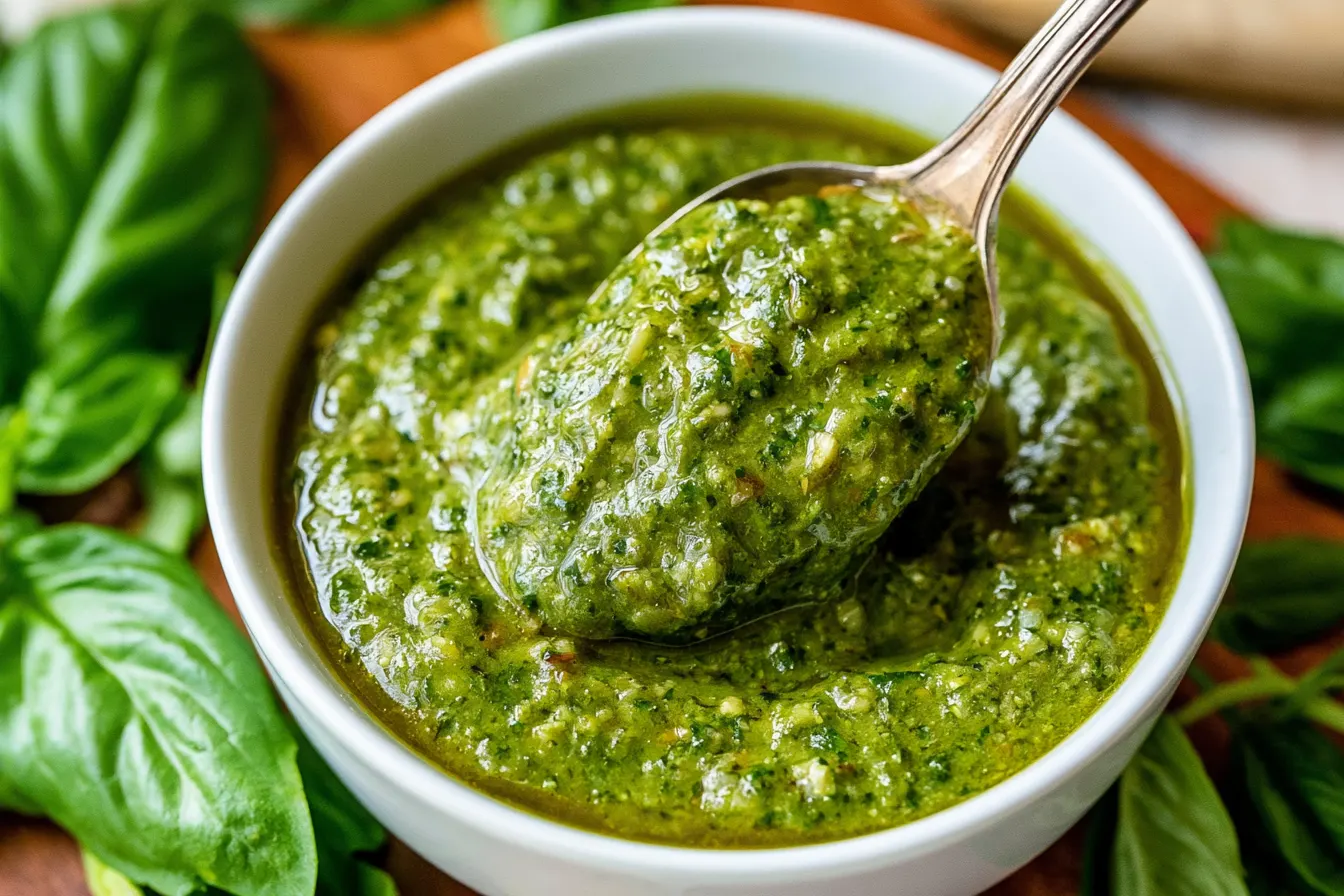
Ever find yourself staring at a bunch of vibrant, fragrant basil from the garden or farmer’s market, wondering what magic you can conjure? For me, that moment inevitably leads to a blender (or food processor, depending on my mood) and the irresistible urge to whip up a batch of homemade basil pesto sauce. It’s one of those culinary staples that feels utterly gourmet, yet is shockingly simple to bring to life in your own kitchen.

Why Homemade Pesto is Always the Best-o
You might be thinking, “Is it really worth making from scratch?” And my answer, without a shadow of a doubt, is a resounding YES. The process itself is incredibly satisfying, watching vibrant green leaves transform into a rich, aromatic paste right before your eyes. It’s a sensory experience that store-bought simply can’t replicate. When you make pesto at home, you’re in control of the quality of your ingredients. You can choose the freshest basil, the finest Parmesan, and nuts that haven’t gone rancid sitting on a shelf. This attention to detail translates directly into a superior flavor profile – bright, zesty, nutty, and perfectly balanced. Plus, no weird preservatives or added sugars here! Just pure, unadulterated goodness.The Essential Ingredients for a Stellar Basil Pesto
Creating a truly memorable basil pesto sauce hinges on just a handful of quality components. Each plays a crucial role in building that signature flavor and texture.Fresh Basil Leaves
The star of the show, of course! You’ll want bright green, unblemished leaves. Avoid any that are wilted or have black spots. The fresher, the better for that intense, sweet, peppery aroma. Gently wash and thoroughly dry them; any excess water can dilute the flavor and impact the texture of your pesto.Garlic Cloves
A couple of fresh garlic cloves provide that essential pungent kick. If you’re not a huge fan of raw garlic’s intensity, you can slightly reduce the amount or even lightly blanch the cloves for a minute to mellow them out. For me, the sharper, the better!Pine Nuts (or a clever alternative!)
Traditionally, pine nuts are used for their creamy texture and subtle sweetness. Lightly toasting them in a dry pan for a few minutes before adding them to the pesto can really enhance their flavor, bringing out a deeper, nuttier note. Keep a close eye on them, as they can burn quickly! Note: If pine nuts are out of your budget or hard to find, walnuts or even almonds can make excellent substitutes. They’ll give the pesto a slightly different character, but still delicious.Parmesan Cheese
Reach for a good quality Parmesan (Parmigiano-Reggiano, if you can get it). Freshly grated cheese melts beautifully into the pesto, providing a salty, umami depth that’s irreplaceable. Pre-grated cheese often contains anti-caking agents that can affect the texture.Olive Oil
This is where quality really shines through. Use a good extra virgin olive oil. Its fruity, slightly peppery notes will meld perfectly with the other ingredients. Avoid anything too strong or bitter, as it can overpower the delicate basil.Salt and Black Pepper
Simple seasonings, but vital for bringing all the flavors into harmony. Taste as you go and adjust to your preference.
Whipping Up Your Own Basil Pesto Sauce: A Simple How-To
Making pesto is less about precise cooking and more about assembly and blending. It’s truly one of the quickest ways to create something delicious from scratch.Gather and Prep Your Goodies
First things first, get all your ingredients ready. Wash and dry your basil leaves thoroughly. Peel your garlic cloves. If you’re toasting your pine nuts, do that now and let them cool slightly. Grate your Parmesan cheese. Having everything prepped makes the blending process smooth and quick.Pulse the Solids Together
In the bowl of a food processor, combine the fresh basil leaves, pine nuts (toasted or raw), garlic cloves, and a pinch of salt. Pulse these ingredients together until they form a coarse paste. You want some texture here, not a completely smooth purée, so don’t overdo it initially. Scrape down the sides of the bowl as needed to ensure everything is evenly processed.Stream in the Olive Oil
With the food processor running on low, slowly drizzle in the extra virgin olive oil through the feed tube. Continue to process until the mixture is well combined and reaches your desired consistency. Some prefer a thicker pesto, while others like it a bit looser. Tip: Don’t add all the olive oil at once! Streaming it in slowly helps emulsify the pesto, creating a smoother, more stable sauce. If you add it too fast, you risk a greasy, separated pesto.Stir in the Parmesan
Once the oil is incorporated, add the grated Parmesan cheese to the food processor. Pulse a few more times until the cheese is just mixed in. Avoid over-processing after adding the cheese, as it can make the pesto gummy.Taste and Adjust
This is the most crucial step! Taste a small spoonful of your fresh basil pesto sauce. Does it need more salt? A twist of black pepper? A little more lemon juice for brightness (though not traditional, a tiny squeeze can be lovely)? Adjust seasonings to your liking.
Beyond Pasta: Creative Ways to Use Your Fresh Pesto
While pesto and pasta are a match made in culinary heaven, don’t limit yourself! This vibrant sauce is incredibly versatile. Sandwich Spreader: Ditch the mayo! Spread a generous layer of pesto on your sandwiches or wraps for an instant flavor upgrade. It’s divine with chicken, turkey, or even just fresh mozzarella and tomato. Pizza Base: Instead of traditional tomato sauce, use pesto as the base for a fresh and zesty pizza. Top with cherry tomatoes, mozzarella, and a sprinkle of feta. Marinade: Whisk pesto into a marinade for chicken, fish, or shrimp. The oil, herbs, and garlic tenderize and infuse incredible flavor. Vegetable Enhancer: Toss roasted or grilled vegetables (think asparagus, zucchini, or bell peppers) with a spoonful of pesto for a bright finish. Egg Power-Up: Swirl a little pesto into scrambled eggs or spread it on toast under your fried eggs for a fancy breakfast. Soup Swirl: Add a dollop to a bowl of minestrone or vegetable soup just before serving for an extra layer of flavor and a pop of color. Dipping Sauce: Serve it alongside crusty bread or focaccia as an appetizer.Common Pesto Quandaries Addressed
It’s a simple recipe, but a few questions often pop up when making pesto. Let’s tackle them!Can I make pesto without pine nuts?
Absolutely! Walnuts are a fantastic, more budget-friendly alternative that offers a slightly earthier flavor. Almonds can also work. Just be sure to toast them lightly for the best flavor.How do I prevent my pesto from turning brown?
Oxidation is the enemy of vibrant green pesto! To combat this, a thin layer of olive oil poured over the top of the pesto before sealing it in an airtight container will create a barrier. Some people also add a tiny squeeze of lemon juice, though it can slightly alter the flavor. Storing it in the fridge in an airtight container also helps.How long does homemade basil pesto last?
Properly stored in an airtight container with a layer of olive oil on top, homemade pesto will keep fresh in the refrigerator for about 5-7 days. The sooner you use it, the brighter its flavor will be.Can I freeze pesto?
Yes, and it’s a fantastic way to preserve that summer basil goodness! Freeze pesto in ice cube trays. Once frozen solid, transfer the pesto cubes to a freezer-safe bag. They’ll keep well for several months, ready to be thawed and used whenever a pesto craving strikes. Thaw them in the fridge or at room temperature.My pesto is too thick/too thin. How can I fix it?
If your pesto is too thick, simply add a little more olive oil, one tablespoon at a time, until you reach your desired consistency. If it’s too thin, you can try adding a few more basil leaves or a tiny bit more grated Parmesan, pulsing until incorporated.
Homemade Basil Pesto Sauce
Bright, fresh homemade basil pesto sauce is easy to make and elevates any dish with its vibrant, herbaceous flavor.
📝 Ingredients
👩🍳 Instructions
- 1In the bowl of a food processor, combine the fresh basil leaves, garlic cloves, pine nuts, salt, and black pepper. Pulse several times until the mixture forms a coarse paste.
- 2With the food processor running on low speed, slowly drizzle in the extra virgin olive oil through the feed tube until the mixture is well combined and reaches your desired consistency. Scrape down the sides of the bowl as needed.
- 3Add the grated Parmesan cheese to the food processor. Pulse a few more times until the cheese is just incorporated. Do not over-process after adding the cheese.
- 4Taste the pesto and adjust salt, pepper, or add a tiny squeeze of lemon juice if desired for brightness.
- 5Transfer the basil pesto sauce to an airtight container. To prevent browning, pour a thin layer of olive oil over the top before sealing.
💡 Notes
For a different flavor profile, substitute walnuts or almonds for pine nuts. Store leftover pesto in the refrigerator for up to a week, or freeze in ice cube trays for longer storage. To thaw, simply let cubes come to room temperature or warm gently.