


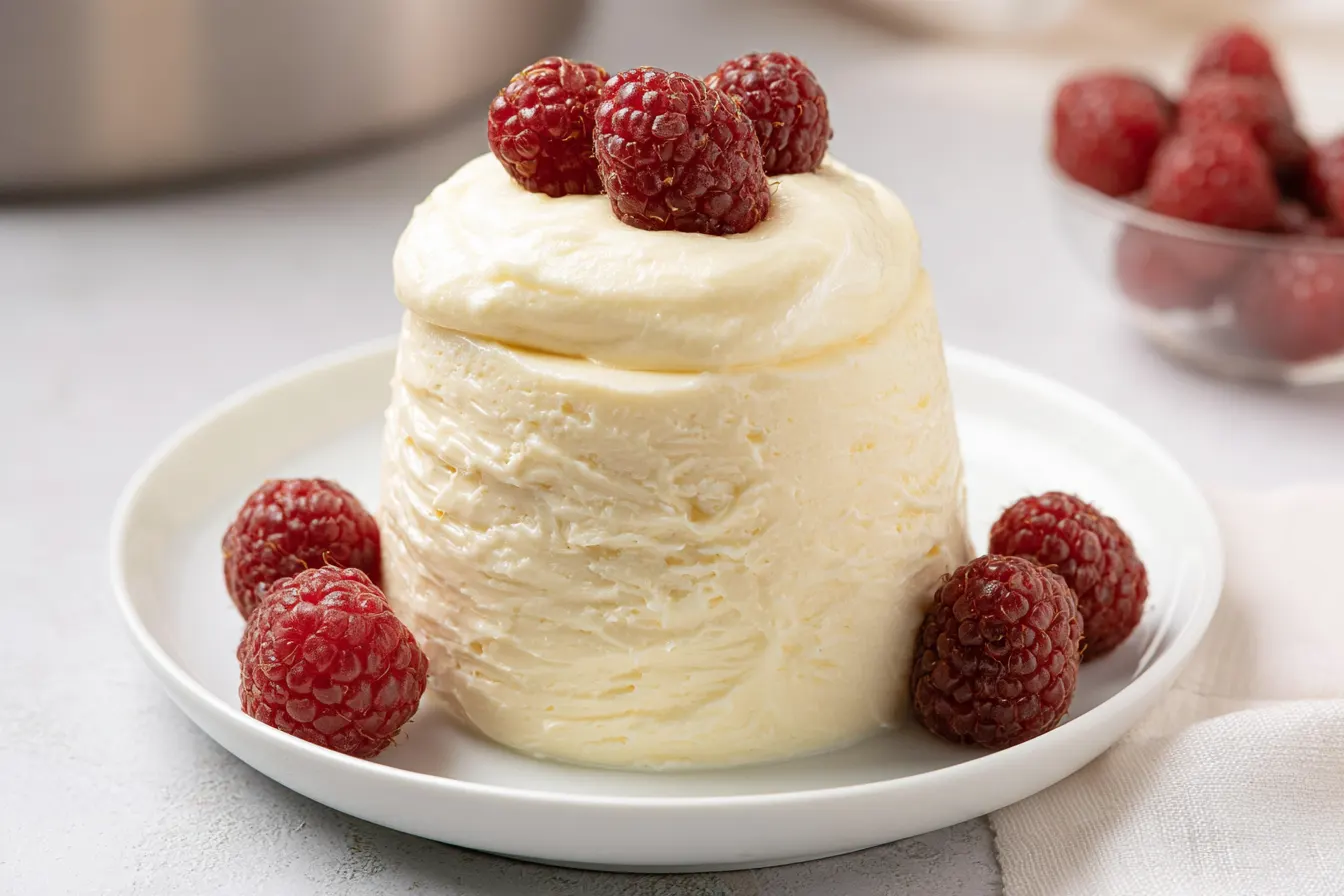
Ever tried to unmold a perfectly set, shimmering dessert only for it to collapse into a sad, wobbly puddle? Me too. Many times. That’s precisely why I became obsessed with mastering Bavarian cream, also known as crème bavaroise – a dessert that promises elegance but can humble even experienced bakers if you don’t nail the setting.
This isn’t just about getting it to hold its shape, though that’s certainly important. It’s about achieving that delicate balance: rich enough to feel indulgent, yet light and airy enough to practically float off the spoon. It’s a true classic, and for good reason.
Forget the overly gelatinous versions you might have encountered. This recipe delivers a smooth, ethereal vanilla cream that’s utterly divine on its own, but also versatile enough to be a show-stopping filling or an elegant topping.

What Makes This Crème Bavaroise So Special?
There are many Bavarian cream recipes out there, but this one focuses on technique to ensure a truly superior texture. We’re not just throwing ingredients into a bowl; we’re building layers of flavor and structure. The key is in the careful tempering of the egg yolks and the gentle folding of whipped cream, creating an almost mousse-like consistency without being overly heavy.
It’s a dessert that feels fancy, but with a little patience, it’s entirely approachable. You’ll be amazed at the professional results you can achieve in your own kitchen.
Getting Started: Your Essential Ingredients
Good ingredients are the foundation of any great dessert, and Bavarian cream is no exception. While the list might seem simple, the quality of each component truly shines through.
For the Vanilla Custard Base:
- Whole Milk: Don’t skimp on this. Whole milk provides the richness and fat content essential for a creamy, luxurious base.
- Granulated Sugar: Sweetens the cream and helps to stabilize the egg yolks.
- Egg Yolks: These are our emulsifiers and thickeners, providing that signature custardy texture and beautiful pale yellow hue.
- Pure Vanilla Extract: Use the best quality you can find. It’s the star flavor here, so a good vanilla makes all the difference.
- Gelatin Powder: This is our setting agent. Unflavored gelatin ensures the cream holds its shape without imparting any unwanted taste.
- Cold Water: For blooming the gelatin.
For the Whipped Cream:
- Heavy Cream (at least 36% fat): Essential for whipping into stable, airy peaks. Ensure it’s very cold!
- Confectioners’ Sugar (optional): Just a touch for a hint of sweetness and extra stability in the whipped cream.

A Quick Word on Gelatin: Don’t Be Scared!
Many home bakers shy away from gelatin, but it’s actually quite straightforward once you understand the process. The most important step is “blooming” it. This involves sprinkling the gelatin powder over cold water and letting it sit for a few minutes. It will absorb the water and swell, becoming a soft, jelly-like mass. This ensures it dissolves smoothly when heated, preventing any grainy texture in your final Bavarian cream.
Think of it as waking up the gelatin. It needs that hydration before it can do its job of setting your beautiful cream.
Step-by-Step: Crafting Your Crème Bavaroise
Patience and attention to detail are your best friends here. Take your time, and you’ll be rewarded with an incredibly smooth and delicious dessert.
1. Bloom the Gelatin:
In a small, heatproof bowl, sprinkle the gelatin powder evenly over the cold water. Give it a gentle stir and let it sit undisturbed for 5-10 minutes. It will absorb the water and become thick and wobbly. Set this aside.
2. Prepare the Custard Base:
Whisk the egg yolks and half of the granulated sugar in a medium bowl until pale and slightly thickened. This aeration helps create a lighter custard.
In a medium saucepan, combine the whole milk and the remaining granulated sugar. Heat over medium heat, stirring occasionally, until the sugar dissolves and small bubbles just start to form around the edges of the pan. Do not let it boil vigorously.
3. Temper the Yolks:
This is a crucial step to prevent scrambling the eggs. Slowly pour about half of the hot milk mixture into the egg yolk mixture, whisking constantly and vigorously. This gradually brings the temperature of the yolks up without cooking them instantly.
Once tempered, pour the warmed egg yolk mixture back into the saucepan with the remaining hot milk. Stir continuously with a spatula or wooden spoon over medium-low heat. Cook until the mixture thickens enough to coat the back of a spoon (about 170-175°F / 77-79°C). Do not boil.
4. Dissolve the Gelatin and Add Vanilla:
Remove the saucepan from the heat. Add the bloomed gelatin to the hot custard base. Stir well until the gelatin is completely dissolved and no lumps remain. The residual heat from the custard will melt it perfectly.
Stir in the pure vanilla extract. Pass the entire custard mixture through a fine-mesh sieve into a clean bowl. This ensures a super smooth, lump-free Bavarian cream. Place plastic wrap directly on the surface of the custard to prevent a skin from forming and let it cool completely to room temperature. It should still be liquid, but no longer warm to the touch.

5. Whip the Cream:
In a large, chilled bowl, whip the very cold heavy cream with the confectioners’ sugar (if using) until medium-soft peaks form. Be careful not to over whip, or it will become grainy.
Tip: Chilling your bowl and whisk attachments for 10-15 minutes before whipping cream makes a huge difference in how quickly and effectively the cream whips up.
6. Fold and Chill:
Once the custard is at room temperature and still pourable (if it’s too cold, it will start to set), gently fold about a third of the whipped cream into the custard base to lighten it. Then, gently fold in the remaining whipped cream until no streaks remain. Be careful not to deflate the air from the whipped cream.
Pour the Bavarian cream into individual serving dishes, ramekins, or a decorative mold that has been lightly oiled (use a neutral oil) or rinsed with cold water. Chill in the refrigerator for at least 4-6 hours, or preferably overnight, until completely set.
Serving Suggestions & Flavor Twists
A classic Bavarian cream needs little embellishment, but a few thoughtful additions can elevate it further. A simple berry compote or fresh berries are always a winning combination, providing a lovely tart contrast to the rich cream. A drizzle of chocolate sauce or a sprinkle of toasted nuts can also add an extra layer of decadence.
For flavor variations, consider infusing the milk with citrus zest (lemon, orange), a cinnamon stick, or even some coffee beans during the heating process for a subtle flavor note. Strain them out before tempering the yolks. You could also fold in a fruit puree (like raspberry or mango) once the custard has cooled, before adding the whipped cream, for a fruity Bavarian cream.
Common Questions About Bavarian Cream
Can I make Bavarian cream without gelatin?
Technically, no, not a traditional Bavarian cream. The gelatin is what gives it its characteristic firm-but-creamy texture. Without it, you’d have a rich vanilla custard, but it wouldn’t hold its shape or have that signature jiggle. Some recipes use cornstarch for a thicker custard, but it won’t achieve the same delicate set.
Why did my Bavarian cream turn out grainy?
A grainy texture often comes from undissolved gelatin. Ensure you bloom the gelatin properly and stir it into the warm custard until it’s completely melted. Another culprit could be over-whipped cream, which can separate and become grainy.
How can I make sure my Bavarian cream unmolds cleanly?
For a clean unmold, lightly oil your mold with a neutral-flavored oil or rinse it with cold water before pouring in the cream. Make sure the cream is thoroughly chilled – ideally overnight. When ready to unmold, quickly dip the bottom of the mold in warm water for a few seconds (don’t let water get into the cream), then invert it onto your serving plate. A thin knife around the edge can help release it.
How long does Bavarian cream last in the refrigerator?
Properly stored in an airtight container, Bavarian cream will keep well in the refrigerator for 2-3 days. After that, the texture might start to degrade slightly, and it’s best enjoyed fresh.
Can I freeze Bavarian cream?
While you can technically freeze Bavarian cream, it’s not ideal. The texture tends to become a bit watery and separates upon thawing due to the dairy and gelatin. It’s best enjoyed fresh and chilled, not frozen.
Storing Your Beautiful Bavarian Cream
Once set, cover your Bavarian cream loosely with plastic wrap or transfer it to an airtight container. It needs to stay cold! Store it in the refrigerator until ready to serve. As mentioned, it’s best enjoyed within 2-3 days for optimal texture and flavor. Beyond that, the delicate structure can start to break down a little.
Keep it away from strong-smelling foods in the fridge, as creams can sometimes absorb odors.
This dessert truly embodies elegance with its simple yet refined flavors. It’s a wonderful project for a weekend, and the result is always met with oohs and aahs. Give this Bavarian cream a try – you won’t regret it!

Velvety Bavarian Cream (Crème Bavaroise)
A classic, elegant vanilla Bavarian cream (crème bavaroise) that's light, airy, and perfect as a dessert or filling.
📝 Ingredients
👩🍳 Instructions
- 1In a small, heatproof bowl, sprinkle the gelatin powder evenly over the cold water. Stir gently and let it sit for 5-10 minutes to bloom, becoming thick and wobbly. Set aside.
- 2In a medium bowl, whisk the egg yolks and half of the granulated sugar until pale and slightly thickened.
- 3In a medium saucepan, combine the whole milk and the remaining granulated sugar. Heat over medium heat, stirring occasionally, until the sugar dissolves and small bubbles just start to form around the edges of the pan. Do not let it boil vigorously.
- 4Slowly pour about half of the hot milk mixture into the egg yolk mixture, whisking constantly and vigorously to temper the yolks. This prevents the eggs from scrambling.
- 5Pour the tempered egg yolk mixture back into the saucepan with the remaining hot milk. Return to medium-low heat and cook, stirring constantly with a spatula, until the mixture thickens enough to coat the back of a spoon (about 170-175°F / 77-79°C). Do not boil.
- 6Remove the saucepan from the heat. Add the bloomed gelatin to the hot custard base. Stir well until the gelatin is completely dissolved and no lumps remain.
- 7Stir in the pure vanilla extract. Pass the entire custard mixture through a fine-mesh sieve into a clean bowl to ensure a super smooth texture. Place plastic wrap directly on the surface of the custard to prevent a skin from forming. Let it cool completely to room temperature, stirring occasionally to help it cool evenly. It should still be liquid, but not warm to the touch.
- 8In a large, chilled bowl, whip the very cold heavy cream with the confectioners' sugar (if using) until medium-soft peaks form. Be careful not to over whip.
- 9Once the custard is at room temperature and still pourable, gently fold about a third of the whipped cream into the custard base to lighten it. Then, gently fold in the remaining whipped cream until no streaks remain, being careful not to deflate the air.
- 10Pour the Bavarian cream into individual serving dishes, ramekins, or a lightly oiled decorative mold. Chill in the refrigerator for at least 4-6 hours, or preferably overnight, until completely set.
- 11To unmold (if using a mold), quickly dip the bottom of the mold in warm water for a few seconds, then invert onto a serving plate. Serve chilled, garnished with fresh berries or a light sauce if desired.
💡 Notes
Ensure all dairy is very cold for whipping. For best results, use fresh, high-quality vanilla extract. You can infuse the milk with other flavors like citrus zest or coffee beans during heating for variations; just strain them out before tempering the yolks. For clean unmolding, lightly oil molds or rinse with cold water before filling.