


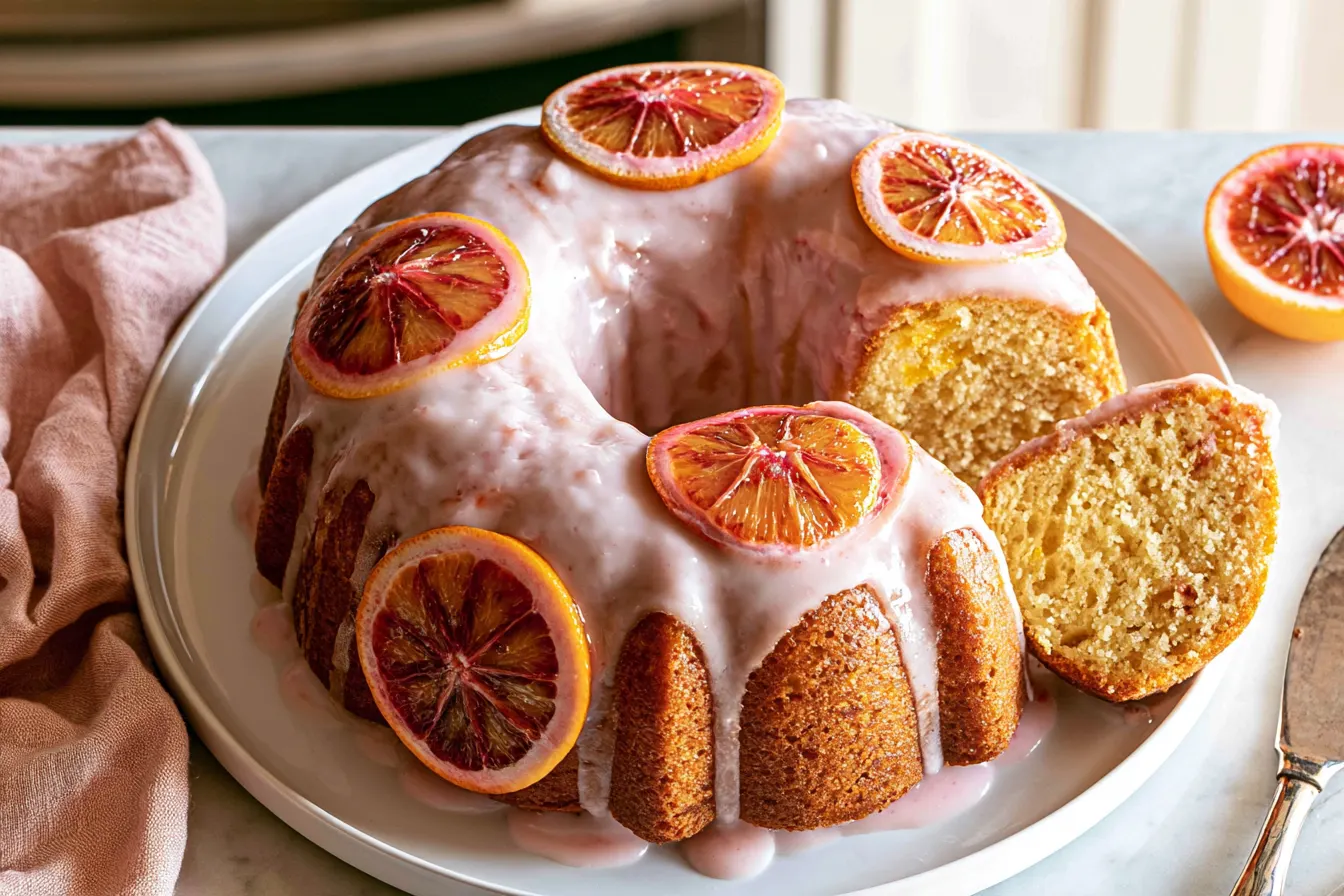
There’s something about the vibrant hue of a blood orange that just screams “special occasion,” even if that occasion is simply a Tuesday afternoon with a cup of tea. I’ve always been drawn to their ruby blush and unique, subtly berry-like citrus notes. This year, as the blood oranges started making their brief, beautiful appearance at the market, I knew exactly what I wanted to create: a truly unforgettable blood orange honey bundt cake that tastes as gorgeous as it looks.

Why This Blood Orange Honey Bundt Cake Will Be Your New Favorite
You might be thinking, “Another bundt cake recipe? What makes this one so different?” Well, I’m glad you asked! This particular recipe is a culmination of several tests, focusing on achieving that perfect balance between moisture, flavor, and texture. It’s not just a cake with blood orange; the blood orange is truly woven into its very being. First, we’re using both the zest and the juice in the cake batter itself, infusing every bite with that distinctive citrus perfume. Then, to really amplify the flavor and keep things incredibly moist, we’re brushing the warm cake with a simple blood orange syrup right after it comes out of the oven. This step is non-negotiable for that ultimate tender crumb! And let’s not forget the star of the show: the honey. It’s not just a sweetener here; it adds a beautiful depth and a subtle floral note that complements the blood orange in a way sugar alone simply can’t. The result is a cake that’s bright and zesty, yet wonderfully comforting and rich. It’s a sophisticated flavor profile that still feels utterly approachable.Gather Your Ingredients: What You’ll Need
Creating this stunning bundt cake requires a few key players, each contributing to its incredible flavor and texture. Don’t skimp on quality here, especially when it comes to your star ingredients!For the Honey Bundt Cake
- All-Purpose Flour: The backbone of our cake. Make sure it’s sifted for a lighter texture.
- Baking Powder & Baking Soda: Our leavening agents, working together to give the cake its beautiful rise and tender crumb.
- Salt: Just a pinch to balance the sweetness and enhance all the other flavors.
- Unsalted Butter: Room temperature is key! It creams better with sugar, creating air pockets for a light cake.
- Granulated Sugar: Provides sweetness and helps with browning.
- Honey: The star sweetener, adding moisture and a unique floral depth. Use a good quality, local honey if you can!
- Large Eggs: Room temperature, please! They emulsify better with the butter and sugar.
- Vanilla Extract: A classic flavor enhancer that rounds out the sweetness.
- Blood Orange Zest: Where a huge amount of that vibrant citrus flavor comes from. Don’t skip this!
- Blood Orange Juice: Adds moisture and tang. Freshly squeezed is always best.
- Buttermilk: Its acidity reacts with the baking soda, contributing to a tender crumb and lovely tang.
For the Blood Orange Syrup
- Blood Orange Juice: Again, freshly squeezed for the best flavor.
- Granulated Sugar: To sweeten the syrup and help it soak into the cake beautifully.
For the Pretty Pink Glaze
- Powdered Sugar: The base for our smooth, pourable glaze. Sift it to avoid lumps.
- Blood Orange Juice: For color and flavor. Start with a little and add more until you reach your desired consistency.
- Honey: A touch more honey in the glaze ties it all back to the cake itself.

Crafting Your Masterpiece: Step-by-Step Guide
Baking a bundt cake might seem intimidating, but I promise, it’s all about following the steps and giving each one a little love. Here’s how we’ll bring this blood orange honey bundt cake to life.Step 1: Prep the Pan and Preheat the Oven
Preheat your oven to 350°F (175°C). This ensures a consistent baking temperature from the moment your cake goes in. For your bundt pan, liberally grease it with butter or a baking spray that contains flour (like Baker’s Joy). Make sure to get into all the nooks and crannies! Then, dust it with a light coating of flour, tapping out any excess. This step is crucial for an easy release.Step 2: Whisk the Dry Ingredients
In a medium bowl, combine your all-purpose flour, baking powder, baking soda, and salt. Whisk them together thoroughly for about 30 seconds. This aerates the flour and evenly distributes the leavening agents, ensuring a uniform rise. Set this aside for now.Step 3: Cream the Butter, Sugar, and Honey
In a large mixing bowl (or the bowl of a stand mixer fitted with the paddle attachment), cream together the softened unsalted butter and granulated sugar on medium speed until light and fluffy, usually about 3-4 minutes. Scrape down the sides of the bowl. Then, add the honey and beat for another minute until fully incorporated and smooth. This creaming process creates tiny air pockets that contribute to the cake’s tender texture.Step 4: Add Eggs and Vanilla
Add the eggs one at a time, beating well after each addition until fully incorporated. Scrape down the bowl again. Then, stir in the vanilla extract and the vibrant blood orange zest. The mixture might look a little curdled at this stage, but don’t worry, it will come together once the dry ingredients are added.Step 5: Alternate Dry and Wet Ingredients
With the mixer on low speed, gradually add the dry ingredient mixture to the wet ingredients, alternating with the buttermilk and blood orange juice. Start and end with the dry ingredients. For example, add about a third of the flour mixture, mix until just combined, then half of the buttermilk and juice, mix, another third of flour, the remaining buttermilk and juice, and finally the last third of flour. Mix *just* until no streaks of flour remain. Overmixing can lead to a tough cake!Step 6: Bake to Golden Perfection
Pour the batter evenly into your prepared bundt pan. Gently tap the pan on the counter a few times to release any air bubbles. Bake for 45-55 minutes, or until a wooden skewer inserted into the center comes out clean. Tip: If the top of your cake starts browning too quickly before the center is done, you can lightly tent it with aluminum foil for the last 10-15 minutes of baking.Step 7: Syrup Soak
While the cake is still warm (but out of the oven), prepare the blood orange syrup. In a small saucepan, combine the blood orange juice and granulated sugar. Heat over medium heat, stirring until the sugar is completely dissolved. Remove from heat. Once the cake has cooled in the pan for about 10-15 minutes, carefully invert it onto a wire rack. While it’s still warm, brush the entire cake with the blood orange syrup. Let it soak in. This step is pure magic for moisture and flavor!
Step 8: Glaze and Serve
Once the cake has completely cooled (this is important, otherwise your glaze will just melt off!), whisk together the powdered sugar, blood orange juice, and honey in a small bowl until smooth and pourable. If it’s too thick, add a tiny bit more juice; if too thin, add more powdered sugar. Drizzle the gorgeous pink glaze over the cooled cake, letting it drip down the sides. You can use the back of a spoon to spread it a bit for a more even coat. Let the glaze set for about 15-20 minutes before slicing and serving.Common Questions About Bundt Cakes & Blood Oranges
Got a few queries bubbling up? You’re not alone! Here are some common questions I hear when baking with blood oranges and bundt pans.What if I don’t have buttermilk?
No problem at all! You can easily make your own buttermilk substitute. For every cup of buttermilk needed, measure out 1 cup of regular milk (dairy or non-dairy works!) and stir in 1 tablespoon of lemon juice or white vinegar. Let it sit for 5-10 minutes until it slightly curdles. This acidity will react with the baking soda just like buttermilk does.My bundt cake always sticks to the pan. What am I doing wrong?
Ah, the dreaded stuck bundt! The key is thorough greasing and flouring. Use solid shortening or softened butter to get into every crevice, then dust generously with flour, tapping out excess. Some bakers swear by baking spray with flour (like Baker’s Joy or Pam Baking). Make sure to let the cake cool in the pan for *exactly* 10-15 minutes before inverting – too soon and it might break, too long and it can stick as it cools and contracts.Can I use regular oranges instead of blood oranges?
Absolutely! While blood oranges lend a unique flavor and that stunning pink hue, a regular navel or Valencia orange will still make a delicious cake. The flavor will be a bit different, perhaps a touch brighter and less berry-like, and your glaze won’t be pink, but it will still be wonderful. Just ensure you’re using fresh juice and zest for the best results.How do I store this bundt cake, and how long does it last?
This blood orange honey bundt cake stays wonderfully moist. Store it at room temperature, loosely covered or in an airtight container, for up to 3-4 days. If your kitchen is particularly warm, you might consider refrigerating it, but bring it to room temperature before serving for the best flavor and texture.Can I make this cake ahead of time?
Yes, this cake is a fantastic make-ahead option! You can bake the cake a day in advance, let it cool completely, and then store it (unglazed) in an airtight container at room temperature. On the day of serving, prepare and apply the glaze. This actually allows the flavors to meld even more beautifully.Variations to Play With
One of the joys of baking is experimenting! This recipe is a fantastic canvas for some delightful twists. Spice it Up: A pinch of cardamom or a tiny bit of ground ginger in the batter would be absolutely divine with the blood orange and honey notes. Start with 1/4 teaspoon and adjust to your liking. Nutty Addition: Fold in 1/2 cup of finely chopped pistachios or almonds into the batter for a lovely textural contrast and nutty flavor. Pistachios would also complement the color beautifully. Lemon-Blood Orange Swirl: If you love a sharper citrus note, consider doing a lemon glaze instead of a full blood orange one, or even swirling a bit of lemon zest into the cake batter alongside the blood orange. Yogurt Swap: For an even more tender crumb, you could experiment with replacing half of the buttermilk with full-fat Greek yogurt. It adds a lovely tang and richness.Serving Suggestions for Your Beautiful Bundt
This blood orange honey bundt cake is undeniably a showstopper on its own. The vibrant color and elegant shape make it perfect for any gathering. For a simple dessert, a slice with a cup of Earl Grey tea or a light coffee is pure bliss. If you’re feeling a bit more decadent, a dollop of freshly whipped cream (perhaps lightly sweetened with a touch of honey!) or a scoop of vanilla bean ice cream would be absolute perfection. It’s also lovely alongside a fresh fruit salad, especially one featuring berries that echo the subtle berry notes of the blood orange. Imagine this at a spring brunch or as the finale to a lovely dinner party!
Blood Orange Honey Bundt Cake
A tender honey bundt cake infused with bright blood orange zest and juice, finished with a beautiful pink blood orange honey glaze.
📝 Ingredients
👩🍳 Instructions
- 1Preheat oven to 350°F (175°C). Grease and flour a 10-12 cup bundt pan thoroughly, ensuring all crevices are coated.
- 2In a medium bowl, whisk together the sifted flour, baking powder, baking soda, and salt. Set aside.
- 3In a large bowl, cream together the softened butter and 1 1/4 cups granulated sugar with an electric mixer until light and fluffy (3-4 minutes). Scrape down the sides of the bowl. Add 1/2 cup honey and beat for another minute until well combined.
- 4Add eggs one at a time, beating well after each addition. Stir in vanilla extract and blood orange zest.
- 5With the mixer on low speed, gradually add the dry ingredients to the wet ingredients, alternating with the blood orange juice and buttermilk. Begin and end with the dry ingredients (e.g., 1/3 flour, 1/2 liquid, 1/3 flour, 1/2 liquid, 1/3 flour). Mix just until no streaks of flour remain; do not overmix.
- 6Pour the batter evenly into the prepared bundt pan. Tap the pan gently on the counter a few times to release air bubbles.
- 7Bake for 45-55 minutes, or until a wooden skewer inserted into the center comes out clean. If the top browns too quickly, tent loosely with foil.
- 8While the cake bakes, prepare the syrup: In a small saucepan, combine 1/4 cup blood orange juice and 2 tablespoons granulated sugar. Heat over medium heat, stirring until sugar dissolves. Remove from heat.
- 9Let the cake cool in the pan for 10-15 minutes, then invert it onto a wire rack. While still warm, brush the entire cake generously with the prepared blood orange syrup. Let the cake cool completely before glazing.
- 10Once the cake is completely cool, prepare the glaze: In a medium bowl, whisk together the sifted powdered sugar, 3-4 tablespoons blood orange juice, and 1 tablespoon honey until smooth and pourable. Adjust juice or powdered sugar for desired consistency.
- 11Drizzle the glaze over the cooled bundt cake, allowing it to drip down the sides. Let the glaze set for 15-20 minutes before slicing and serving.
💡 Notes
Ensure all cold ingredients (butter, eggs, buttermilk) are at room temperature for the best emulsion and cake texture. Store any leftover cake in an airtight container at room temperature for up to 3-4 days. For an extra touch, garnish with thin slices of fresh blood orange or candied orange peel.