


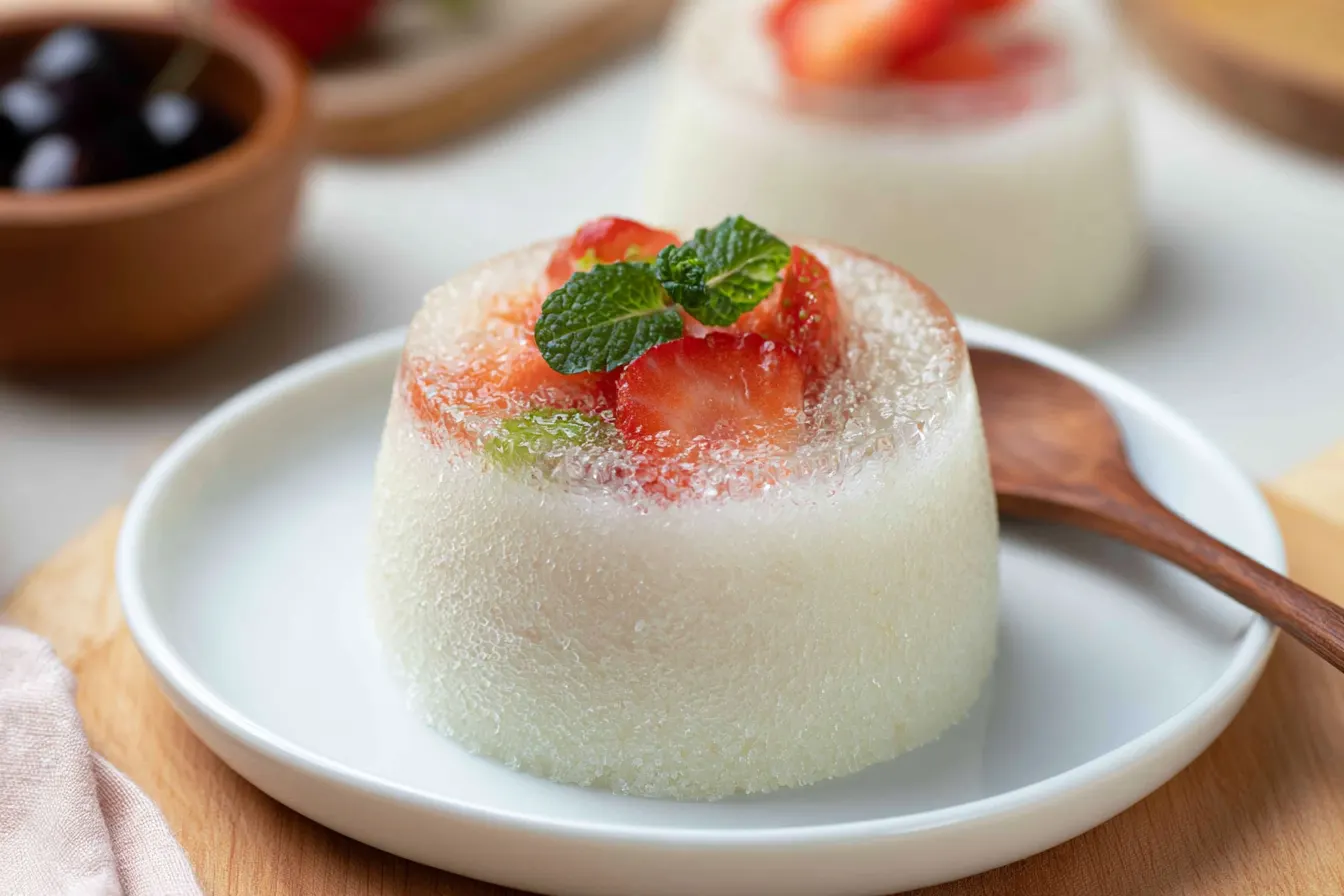
Have you ever been halfway through a recipe, excitedly whisking away, only to realize the crucial ingredient – gelatin – is missing from your pantry? Or perhaps you’re catering to dietary needs, avoiding animal products, and need a reliable gelatin substitute that won’t compromise your dessert’s perfect wobble?
It’s a common kitchen quandary, one that used to send me into a panic. I remember trying to make a delicate panna cotta for a dinner party, only to discover I was out of gelatin sheets. My first attempt at substitution involved a desperate, unmeasured dash of cornstarch, which, as you can imagine, resulted in a rather unappetizing, gloopy mess. Live and learn, right?
That experience sparked a mission: to truly understand the science behind gelling agents and find the best alternatives. Today, consider me your culinary guide through the often-mystifying world of thickeners and stabilizers. We’re going to demystify gelatin and explore incredible plant-based and other options that will save your desserts, jellies, and savory dishes.

Before we dive into the replacements, let’s quickly chat about what gelatin actually does. It’s a protein derived from animal collagen, and its unique structure allows it to form a thermo-reversible gel. This means it sets when cold and melts when warm, giving those delightful jiggly textures to everything from fruit jellies to cheesecakes. Its neutral flavor and smooth mouthfeel make it incredibly versatile in the kitchen.
However, for various reasons – be it veganism, religious dietary laws, or simply not having it on hand – many home cooks need viable alternatives. Luckily, the world of food science offers a fantastic array of choices, each with its own quirks and best uses.
Why Seek a Gelatin Substitute?
Beyond the “oops, I ran out!” moment, there are several compelling reasons to explore alternatives. Dietary restrictions are a big one; traditional gelatin isn’t vegan, vegetarian, or kosher/halal. Some people also have allergies or sensitivities to animal products. Plus, certain substitutes can offer unique textures or setting properties that might even be preferable for specific applications.
Knowing your options empowers you to adapt recipes, experiment with new textures, and cater to a wider range of palates. It’s about culinary freedom!
The Best Gelatin Substitutes for Baking and Beyond
When you’re looking for a good gelatin substitute, you’re essentially searching for an ingredient that can provide structure, stability, and that characteristic ‘set’ without the animal-derived protein. Each of these options has its own strengths and ideal applications.
Agar-Agar Powder (Kanten)
This is arguably the most popular and versatile plant-based alternative to gelatin, especially for those seeking vegan options. Derived from red algae, agar-agar is a powerful gelling agent that creates a firm, often slightly more brittle texture than gelatin. It’s flavorless and colorless, making it perfect for a wide range of desserts.
- How to use it: Agar-agar needs to be dissolved in a liquid and then boiled for a few minutes to activate its gelling properties. It sets at room temperature and remains stable even in warm environments, unlike gelatin, which will melt.
- Ratio: Generally, 1 teaspoon of agar-agar powder is equivalent to 8 teaspoons (or one 0.25-ounce packet) of gelatin powder. Always check your specific recipe and agar-agar brand, as potency can vary.
- Best for: Vegan cheesecakes, fruit jellies, panna cotta, aspics, and anything requiring a firm, stable set.
- Considerations: It can sometimes produce a slightly firmer, less “wobbly” texture than gelatin. Also, acidic ingredients can reduce its gelling power, so you might need to use a little more or adjust your recipe.
Cornstarch (Corn Flour)
Ah, trusty cornstarch! This pantry staple is a fantastic thickening agent, though it behaves differently from gelatin. Instead of creating a firm, elastic gel, cornstarch thickens liquids into a more opaque, creamy consistency. It’s perfect for sauces, gravies, and pie fillings where you want a smooth, rich texture rather than a clear, jiggly one.
- How to use it: Always mix cornstarch with a small amount of cold liquid (water, milk, or juice) to form a slurry before adding it to hot liquids. This prevents lumps. Bring the mixture to a boil and simmer until thickened.
- Ratio: For thickening, you’ll generally use 1 tablespoon of cornstarch per cup of liquid. It’s not a direct 1:1 replacement for gelatin in terms of texture, but it’s excellent for achieving viscosity.
- Best for: Fruit pie fillings, custards, puddings, gravies, and stir-fry sauces.
- Considerations: Overheating can cause it to thin out again. It also doesn’t create a clear gel like gelatin.
Arrowroot Powder (Arrowroot Starch)
Similar to cornstarch, arrowroot powder is a natural thickener extracted from the root of the arrowroot plant. It creates a clearer, glossier finish than cornstarch and is more stable with acidic ingredients. It also holds up better to freezing and thawing without breaking down, making it a good choice for dishes you plan to freeze.
- How to use it: Like cornstarch, create a slurry with cold liquid before adding to hot ingredients. Heat gently until thickened; avoid prolonged boiling, as this can reduce its thickening power.
- Ratio: You can generally substitute arrowroot for cornstarch at a 1:1 ratio, but some find it has double the thickening power, so start with less and add more if needed. It’s not a direct gelatin replacement for jelling.
- Best for: Clear fruit sauces, glazes, gravies, and any dish where clarity is desired.
- Considerations: Can become slimy if overcooked or over-stirred.
Carrageenan (Irish Moss)
Another seaweed-derived gelling agent, carrageenan comes in several forms, each producing a different texture. Kappa carrageenan creates a firm, brittle gel, while iota carrageenan produces a softer, more elastic gel. It’s commonly used in dairy products to prevent separation and add creaminess.
- How to use it: Typically dissolved in hot liquid and then cooled to set. The specific type of carrageenan will dictate its application and ratio.
- Ratio: Varies significantly by type and desired firmness. Often used in much smaller quantities than agar-agar.
- Best for: Vegan dairy alternatives (yogurts, ice creams), puddings, and some jellies.
- Considerations: Can be tricky to work with for the home cook due to its varying forms and specific activation requirements. Some people report digestive sensitivities to carrageenan, particularly the degraded form, though food-grade carrageenan is considered safe.

Xanthan Gum
Xanthan gum is a powerful thickening agent and stabilizer that doesn’t require heat to activate. A little goes a very long way! It’s excellent for preventing ingredients from separating and adding body to liquids without creating a gel. It’s also a common ingredient in gluten-free baking to provide structure.
- How to use it: Sprinkle tiny amounts into liquids while whisking vigorously to prevent clumps. It thickens almost instantly.
- Ratio: Use in very small quantities, often starting with 1/4 to 1/2 teaspoon per cup of liquid. It’s not a direct gelatin substitute for creating a firm gel, but it can provide significant viscosity.
- Best for: Salad dressings, sauces, gravies, gluten-free baked goods, and smoothies for added creaminess.
- Considerations: Can become gummy if too much is used. It creates a viscous liquid, not a firm set like gelatin.
Pectin
Pectin is a natural gelling agent found in fruits, particularly apples and citrus. It’s what makes jams and jellies set! It requires sugar and acid to gel effectively, which makes it ideal for fruit-based preserves. You can find it in powdered or liquid form.
- How to use it: Follow package directions carefully, as different types of pectin (e.g., high-methoxyl, low-methoxyl) have specific requirements for sugar and acid content.
- Ratio: Varies by type and recipe, but typically 1 packet (or 1.75 oz) of powdered pectin will set 4-5 cups of fruit.
- Best for: Jams, jellies, marmalades, and fruit preserves.
- Considerations: Requires specific ratios of sugar and acid to achieve a proper set. Not suitable for savory applications or recipes without fruit/sugar.
Kuzu (Kudzu Root Starch)
A lesser-known but excellent Japanese thickener, kuzu starch is derived from the kuzu plant root. It produces a smooth, glossy, translucent sauce or gel, similar to arrowroot but with even more delicate results. It’s often used in traditional Asian desserts and savory dishes.
- How to use it: Dissolve kuzu in a small amount of cold water first to create a slurry. Add to hot liquids and cook gently until clear and thickened.
- Ratio: Typically 1-2 tablespoons per cup of liquid for thickening, but again, for a gelatin-like set, you’d need to experiment with higher concentrations.
- Best for: Fruit glazes, clear sauces, puddings, and as a thickener for delicate soups.
- Considerations: Can be more expensive and harder to find than other thickeners.

Choosing the Right Gelatin Replacement for Your Recipe
The key to successful substitution lies in understanding the end goal for your dish. Are you aiming for a firm, clear jelly? A creamy, opaque pudding? A stable, yet melt-in-your-mouth panna cotta? Each gelatin alternative offers a slightly different texture and set.
For a direct swap in recipes like jellies, aspics, or vegan cheesecakes where a firm, clear set is crucial, agar-agar is your best bet. It mimics gelatin’s power most closely, just remember to boil it!
If you’re making a fruit pie filling or a creamy custard, cornstarch or arrowroot will get you that lovely, thick consistency. For a smooth, stable sauce without much heat, a tiny pinch of xanthan gum works wonders.
Tips for Mastering Your Gelatin Substitute
- Read the Package: Always, always check the specific instructions on your chosen substitute’s packaging. Ratios and activation methods can vary by brand.
- Start Small, Add More: Especially with powerful thickeners like agar-agar or xanthan gum, it’s better to start with less than you think you need and add more if the desired consistency isn’t achieved. You can always add more, but you can’t take it out!
- Test a Small Batch: If it’s a critical recipe, try a small test batch with your chosen substitute and a little bit of your liquid to see how it sets. This saves potential disappointment with the whole dish.
- Consider Acidity: Acidic ingredients (like lemon juice or vinegar) can weaken the gelling power of some substitutes, particularly agar-agar. You might need to increase the amount slightly in very acidic recipes.
- Mind the Temperature: Gelatin sets when cold and melts when warm. Agar-agar, on the other hand, sets at room temperature and remains stable at higher temperatures. This is a crucial difference to remember!
Frequently Asked Questions About Gelatin Alternatives
Can I use fruit puree instead of gelatin for thickening?
While fruit purees add body and flavor, they don’t have the gelling power of gelatin on their own. However, high-pectin fruits (like apples, cranberries, or quince) can aid in setting if combined with sugar and acid, especially if you’re making a jam-like consistency.
Is there a kosher or halal gelatin substitute?
Yes! Agar-agar is a fantastic option as it’s plant-based and contains no animal products, making it suitable for kosher, halal, and vegan diets. Some brands also offer fish-based gelatin, which may be permissible in certain kosher or halal diets, but always check certifications.
What’s the difference between gelatin and collagen?
Gelatin is essentially cooked collagen. Collagen is a protein found in animal connective tissues. When collagen is boiled, it breaks down into gelatin. While both offer health benefits, gelatin has the unique ability to form a gel, which collagen does not.
Will my dessert taste different with a gelatin substitute?
Most gelatin substitutes, like agar-agar, cornstarch, or arrowroot, are flavorless, so they shouldn’t alter the taste of your dish. However, they will often create a slightly different texture. Agar-agar might be firmer; cornstarch will be creamier. It’s a textural difference, not a flavor one.
Can I use more than one substitute at a time?
In some professional applications, multiple thickeners are used to achieve specific textures, but for home cooking, it’s generally best to stick to one. Combining them without knowing their interactions can lead to unpredictable results or unwanted textures.
Crafting Deliciousness with Confidence
Don’t let the absence of gelatin hold you back from creating beautiful, stable, and delicious dishes. With these fantastic alternatives at your fingertips, you can confidently tackle any recipe that calls for a gelling agent. Whether you’re making a vegan dessert, a gluten-free pie, or just improvising with what’s in your pantry, there’s a perfect gelatin substitute waiting to be discovered.
So go forth and experiment! You might just find that your new favorite gelling agent opens up a whole new world of culinary possibilities. Happy cooking!

Agar-Agar Gelatin Replacement Guide
A comprehensive guide to using agar-agar as a substitute for gelatin in various recipes, ensuring perfect vegan results.
📝 Ingredients
👩🍳 Instructions
- 1In a small saucepan, whisk together 1 teaspoon of agar-agar powder with 1 cup of cold liquid until fully dissolved.
- 2Bring the mixture to a rolling boil over medium-high heat, stirring constantly to prevent sticking.
- 3Reduce heat and simmer for 3-5 minutes, ensuring the agar-agar is completely dissolved. It should look clear with no grainy particles.
- 4Remove from heat and stir in any desired sweeteners or flavorings.
- 5Pour the hot liquid into your chosen mold or container.
- 6Allow to cool to room temperature. The agar-agar will begin to set as it cools, usually within 15-30 minutes.
- 7Once fully set, chill in the refrigerator for at least 1 hour before serving for optimal firmness.
💡 Notes
This ratio of 1 tsp agar-agar powder to 1 cup liquid is a general guideline for a firm set, roughly equivalent to one 0.25-ounce packet of gelatin. For a softer set, use slightly less agar-agar. For very acidic liquids, you might need to increase the agar-agar by about 10-20% to achieve the desired firmness. Agar-agar sets at room temperature and won't melt at warmer temperatures like gelatin, making it ideal for dishes that need to hold shape.