

Ever stood in your kitchen, staring at a recipe that calls for “a cup of milk” but all you have is a tablespoon, or vice versa? That used to be me, more times than I care to admit! There’s a moment of pure panic where you scramble for your phone, hands covered in flour, trying to figure out how many tablespoons in a cup. It’s those little conversions that can make or break a recipe, and honestly, who has time for math when there’s a delicious meal waiting to be made?
Cooking and baking are meant to be joyful, a creative escape, not a pop quiz on imperial measurements. While a digital scale is a fantastic tool for precision, especially in baking, sometimes you’re just working with what you’ve got – and often, that means a trusty set of measuring spoons.
That’s precisely why I decided to put together this guide. Think of it as your kitchen’s best friend, always ready to whisper the correct conversion when you’re in a pinch. No more frantic Googling mid-recipe, no more guessing games. Just clear, concise answers to help you cook with confidence.

Let’s cut right to the chase, because when you’re in the middle of a recipe, every second counts. The straightforward answer to the question “how many tablespoons in a cup?” is 16 tablespoons. Yes, exactly sixteen. This is a fundamental conversion in the culinary world, and once it’s etched into your memory, your cooking life will become so much easier.
This standard holds true for both liquid and dry ingredients, though how you measure them will differ. For liquids, you’d fill your tablespoon to the brim. For dry ingredients, you’d level it off with the back of a knife. Simple, right?
Why Does Knowing This Matter?
You might be thinking, “Well, I have a measuring cup, so why do I need this?” And that’s a fair point! But kitchen life is rarely that straightforward. Consider these scenarios:
- Scaling Recipes: Halving or doubling a recipe often means dealing with awkward fractions of cups. Knowing the tablespoon conversion makes these adjustments seamless. For instance, if you need to half 1/4 cup, it’s much easier to think of it as 4 tablespoons and then use 2 tablespoons.
- Missing Tools: We’ve all been there – the measuring cup is in the dishwasher, or you only have a set of spoons available. Knowing this conversion means you can still proceed without skipping a beat.
- Precision for Small Amounts: Sometimes, a recipe calls for a very precise, small amount, like 1/8 of a cup. Rather than trying to eyeball a tiny fraction in a cup, it’s far more accurate to measure out 2 tablespoons.
- Ingredient Consistency: Different ingredients behave differently. A cup of flour isn’t the same weight as a cup of sugar. But for volume, the tablespoon remains constant.
Understanding these basic conversions empowers you to adapt, improvise, and conquer any recipe thrown your way. It builds a foundation of kitchen knowledge that will serve you well for years to come.

Diving Deeper: Tablespoons to Cups Chart
While 16 tablespoons to a cup is the golden rule, it’s helpful to visualize some common fractions. This quick reference chart is perfect for printing out and sticking inside a kitchen cabinet door.
| Cups | Tablespoons |
|---|---|
| 1/8 cup | 2 tablespoons |
| 1/4 cup | 4 tablespoons |
| 1/3 cup | 5 tablespoons + 1 teaspoon |
| 1/2 cup | 8 tablespoons |
| 2/3 cup | 10 tablespoons + 2 teaspoons |
| 3/4 cup | 12 tablespoons |
| 1 cup | 16 tablespoons |
See how handy that is? Especially for those pesky 1/3 and 2/3 cup measurements. Instead of trying to guess where the line is, you can just use your trusty tablespoon and teaspoon set.
Beyond Cups: Other Key Kitchen Conversions
Knowing how many tablespoons in a cup is fantastic, but let’s not stop there. The kitchen is full of measurement mysteries! Here are a few other essential conversions that will make you a kitchen whiz:
Teaspoons to Tablespoons
This is probably the next most frequent conversion you’ll encounter. There are 3 teaspoons in 1 tablespoon. So, if a recipe calls for 1 tablespoon of vanilla extract and you only have a teaspoon, you’ll simply measure out three teaspoons instead. Easy peasy!
Fluid Ounces to Cups and Tablespoons
Liquid ingredients are often measured in fluid ounces, especially in American recipes. Here’s how they stack up:
- 1 fluid ounce = 2 tablespoons
- 8 fluid ounces = 1 cup
- 16 fluid ounces = 1 pint
- 32 fluid ounces = 1 quart
- 128 fluid ounces = 1 gallon
This can get a little confusing because dry ounces (weight) are different from fluid ounces (volume). Always remember that fluid ounces are for liquids!
Pints, Quarts, and Gallons
When you’re making larger batches of soups, sauces, or beverages, these conversions become invaluable.
- 2 cups = 1 pint
- 2 pints = 1 quart
- 4 quarts = 1 gallon
Think of it as a hierarchy. Four cups make a quart, and four quarts make a gallon. Knowing this makes scaling up your favorite lemonade recipe a breeze.

Understanding Measurement Differences: Dry vs. Liquid
While the volume conversions we’ve discussed apply to both dry and liquid ingredients, the *method* of measuring is crucial. This is where many home cooks can go astray, leading to inconsistent results, especially in baking.
Measuring Dry Ingredients (Flour, Sugar, etc.)
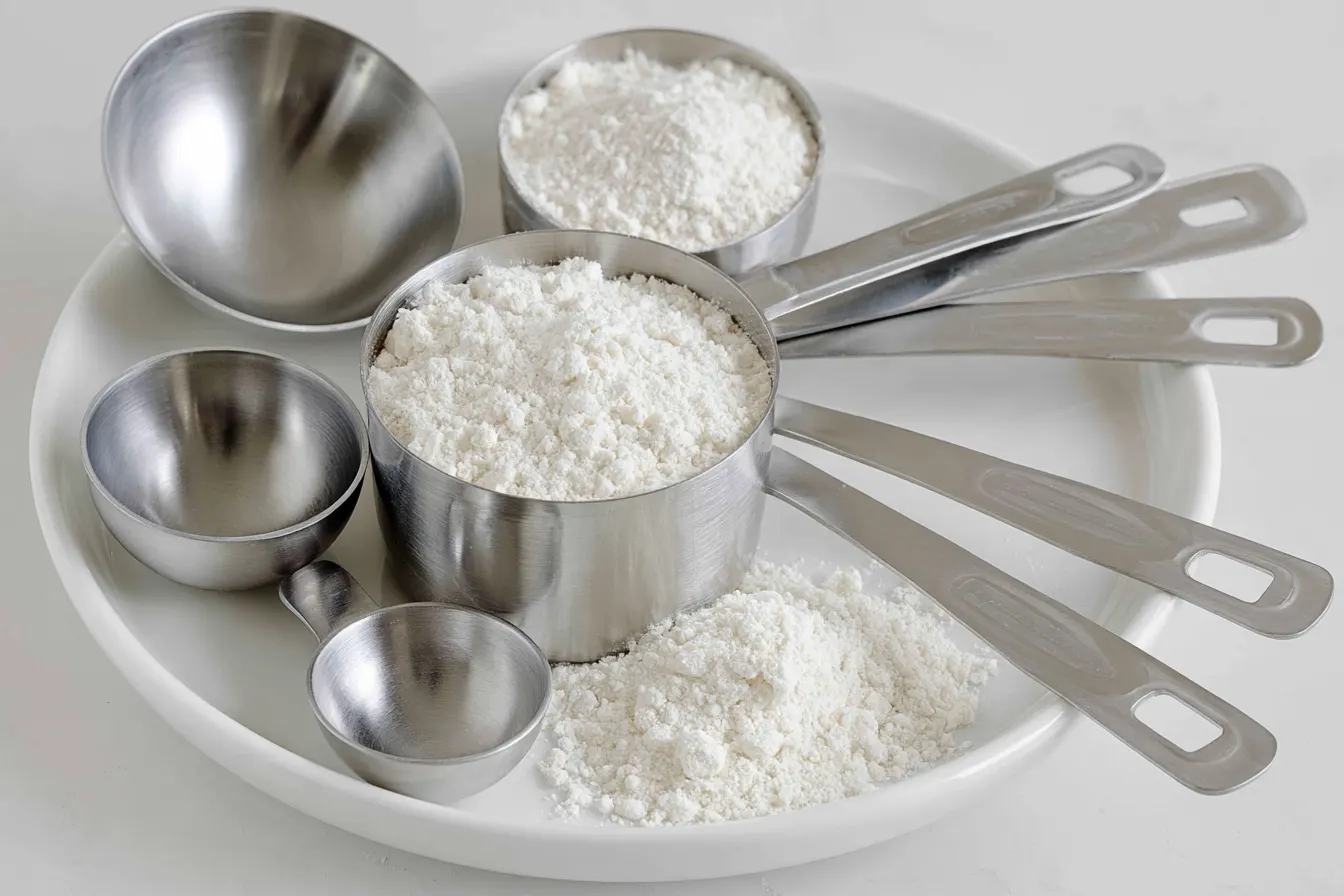
When you’re measuring dry ingredients like flour, granulated sugar, or cocoa powder, you want to use the “spoon and level” method. This means:
- Fluff up the ingredient with a spoon in its container.
- Gently spoon the ingredient into your measuring cup or tablespoon until it’s overflowing. Do not pack it down, unless the recipe specifically says “packed.”
- Use a straight edge (like the back of a knife or a flat ruler) to level off the excess from the top of the cup or spoon. This ensures you have an accurate, uncompacted measurement.
Note: Packing flour, for example, can add significantly more flour to your recipe than intended, resulting in dry, dense baked goods. This is why a kitchen scale is often recommended for baking, as it measures by weight, which is always consistent.
Measuring Liquid Ingredients (Water, Milk, Oil, etc.)
Measuring liquids is generally more straightforward:
- Place your liquid measuring cup (which usually has a spout for pouring) on a flat, level surface.
- Pour the liquid into the cup.
- Bend down so your eyes are level with the measurement line you’re aiming for. This ensures you get an accurate reading, avoiding parallax error.
- For tablespoons and teaspoons, simply fill to the brim.
The key here is getting to eye-level. Looking down at a measuring cup from above can make it seem like you have more liquid than you actually do.
Practical Tips for Accurate Measuring
Even with all the conversions memorized, a few simple practices can elevate your accuracy and consistency in the kitchen.
- Invest in Good Measuring Tools: A set of stainless steel measuring cups and spoons that are clearly marked will last a lifetime. Look for sets where the measurements are engraved, not just printed, as printed measurements can wear off.
- Level Surfaces are Key: Always measure liquids on a flat surface. Don’t hold the cup in your hand, as it can tilt and give an inaccurate reading.
- Clean as You Go: Have a small bowl for discarded excess ingredients (like leveled-off flour) or a damp cloth for quick wipes. This prevents cross-contamination and keeps your workspace tidy.
- Read the Recipe Twice: Before you even start measuring, read through the entire recipe. This helps you anticipate ingredients and measurements, reducing the chance of error.
- Don’t Be Afraid to Practice: The more you cook and bake, the more intuitive these measurements will become. Start with simple recipes and build your confidence.
Frequently Asked Questions About Kitchen Conversions
How many tablespoons are in half a cup?
Since there are 16 tablespoons in a full cup, half a cup would be exactly 8 tablespoons. This is a very common measurement, so it’s a great one to commit to memory!
Is a tablespoon the same size in all countries?
No, unfortunately! While the U.S. tablespoon is generally 15 ml (or approximately 0.5 fluid ounces), some other countries have slightly different standards. For example, in Australia, a tablespoon is 20 ml, and in the UK, it’s often 17.7 ml or 15 ml. This is why baking recipes, in particular, often benefit from using a kitchen scale that measures in grams, as weight is universal.
What’s the difference between a tablespoon and a dessert spoon?
A tablespoon is a standard unit of measurement, while a dessert spoon is typically an eating utensil, slightly smaller than a tablespoon and larger than a teaspoon. While they look similar, you shouldn’t use a dessert spoon for measuring in a recipe unless it specifically calls for it and clarifies its volume (which is rare). Always stick to proper measuring spoons for accuracy.
Can I convert tablespoons to grams?
You can, but it’s not a direct conversion like volume to volume. Grams measure weight, while tablespoons measure volume. The conversion from tablespoons to grams will vary significantly depending on the density of the ingredient. For example, 1 tablespoon of water is about 15 grams, but 1 tablespoon of flour is only about 8 grams, and 1 tablespoon of sugar is around 12-13 grams. For precise measurements in grams, a kitchen scale is essential.
Why do some recipes use cups and others use grams?
Recipes using cups (volume measurements) are more common in American home cooking, reflecting a tradition of using standard measuring cups and spoons. Recipes using grams (weight measurements) are often preferred in professional baking and European cuisine because measuring by weight is far more precise and consistent. Weight isn’t affected by how much you pack an ingredient, or its density, leading to more reliable results, especially for delicate pastries and breads.
Mastering basic kitchen conversions like “how many tablespoons in a cup” is one of those small but mighty steps that transforms you into a more confident and capable cook. It removes the guesswork and replaces it with precision, allowing your creativity to truly shine in the kitchen. So go forth, measure with confidence, and make something delicious!

Kitchen Measurement Conversions Guide
Unlock kitchen confidence with this guide on how many tablespoons in a cup and other essential conversions.
📝 Ingredients
👩🍳 Instructions
- 1Familiarize yourself with the core conversion: 1 cup = 16 tablespoons.
- 2Learn the smaller conversion: 1 tablespoon = 3 teaspoons.
- 3Understand common fractions: 1/2 cup = 8 tablespoons, 1/4 cup = 4 tablespoons.
- 4Practice the spoon and level method for dry ingredients: fluff, spoon into cup/spoon, then level off with a straight edge. Do not pack unless specified.
- 5For liquid ingredients, place the measuring cup on a flat surface and get to eye level to read the measurement accurately.
- 6Keep this guide handy for quick reference during your cooking and baking adventures!
💡 Notes
Always use proper measuring tools, not eating utensils, for accurate results. Remember that dry and liquid measuring methods differ slightly. Consider investing in a kitchen scale for more precise baking, especially for international recipes.