👩🍳 Instructions
-
1
Place the unsalted butter in a light-colored, heavy-bottomed saucepan over medium heat. This type of pan helps you clearly see the color change.
-
2
Allow the butter to melt completely. As it melts, it will begin to foam and bubble. This is the water content evaporating.
-
3
Continue to cook, swirling the pan occasionally. The foaming will subside, and you'll start to see small white specks forming at the bottom of the pan. These are the milk solids.
-
4
Keep a close eye on the butter. The milk solids will gradually change from white to a pale golden, then to a rich amber, and finally to a deep, nutty brown. A distinct nutty, toasted aroma will fill your kitchen.
-
5
As soon as the butter reaches a deep golden-brown color and smells wonderfully nutty (this happens quickly!), immediately remove the pan from the heat. The residual heat in the pan can cause it to burn very fast.
-
6
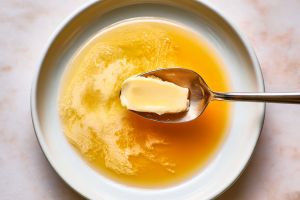
Pour the hot brown butter, including all the browned bits at the bottom, into a separate heat-proof bowl or container to stop the cooking process. Do not leave it in the hot pan.
-
7
Allow the brown butter to cool slightly before using, or cool completely to solidify for later use. Store solidified brown butter in an airtight container in the refrigerator for up to 2 weeks.
💡 Notes
Always use a light-colored pan to monitor the color change effectively. Don't walk away from the stove, as butter can go from perfect to burnt in seconds. The browned bits are packed with flavor, so make sure to scrape them all into your storage container or recipe.
🥗 Nutrition (per serving)
Calories
100 kcal
Protein
0g
Total Fat
11g
Saturated Fat
7g
Carbs
0g
Fiber
0g
Sugar
0g
Sodium
1mg
Cholesterol
30mg