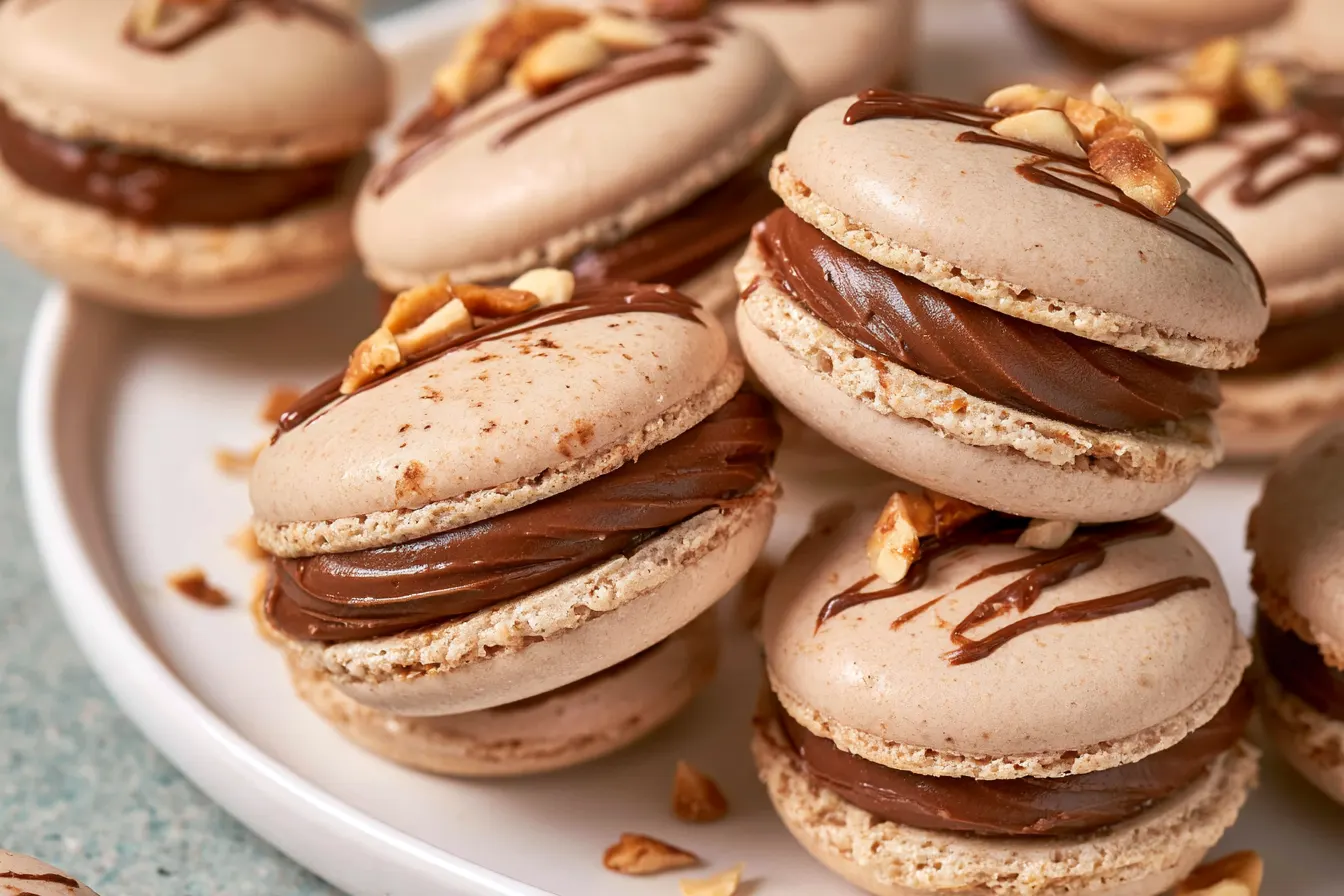
When I first tried making French macarons, it felt less like baking and more like a high-stakes science experiment gone wonderfully, terribly wrong. My kitchen looked like a confectionary war zone, and the resulting “macarons” were more akin to deflated, sticky cookies. But oh, the allure of those delicate, shell-like treats persisted! It was this stubborn pursuit of perfection that eventually led me to these utterly delightful Chocolate Hazelnut Macarons – a true testament to perseverance, and the sheer joy of biting into something truly special.
There’s something incredibly satisfying about transforming simple ingredients like almond flour, sugar, and egg whites into such an elegant dessert. The crisp outer shell, the chewy interior, and that glorious, melt-in-your-mouth filling – it’s a symphony of textures and flavors. For anyone who loves the classic combination of chocolate and hazelnut, these aren’t just macarons; they’re a tiny, edible dream.
This recipe isn’t just about following steps; it’s about understanding the subtle dance between temperature, technique, and patience. And trust me, the payoff is absolutely worth every whisk and fold. You’ll soon be impressing everyone with these stunning little jewels.
Mastering the Macaron Shell: Key Elements for Success
Macarons have a reputation for being finicky, and while there’s certainly a learning curve, they’re far from impossible. The secret lies in a few crucial details that, once mastered, make all the difference. We’ll be using the French meringue method here, which is often considered a great starting point for beginners. It’s robust and provides a stable meringue, perfect for those signature “feet.”
Assembling Your Macaron Arsenal
Before we even think about mixing, let’s talk tools. Having the right equipment can significantly ease the process and improve your results. Don’t skip these; they’re truly helpful.
Digital Kitchen Scale: Non-negotiable! Macarons thrive on precision. Measuring by volume (cups) is too inconsistent.
Stand Mixer with Whisk Attachment: While you *can* do it by hand, a stand mixer makes whipping the meringue much easier and more consistent.
Fine Mesh Sieve: Essential for sifting your dry ingredients to prevent lumps.
Rubber Spatula: A sturdy, flexible spatula is key for the macaronage process.
Piping Bags and Round Tip (like Wilton 1A or Ateco 806): For neatly piping your macaron shells.
Silicone Baking Mats (e.g., Silpat): These provide excellent non-stick surfaces and help with even baking. Parchment paper can work but might lead to more spreading.
Baking Sheets: Sturdy, flat baking sheets are important for even heat distribution.
The Essential Ingredients for Chocolate Hazelnut Macarons
Every component plays a vital role. Using high-quality ingredients will elevate the final taste and texture of your macarons.
For the Macaron Shells
100g aged egg whites (about 3 large eggs), at room temperature
90g granulated sugar
100g almond flour, finely ground
100g powdered sugar (confectioners’ sugar)
10g unsweetened cocoa powder (Dutch-processed for richer color)
Pinch of salt
1/4 tsp cream of tartar (optional, but helps stabilize meringue)
For the Chocolate Hazelnut Ganache Filling
100g dark chocolate (60-70% cocoa solids), finely chopped
100g heavy cream
2 tablespoons unsalted butter, softened
2 tablespoons hazelnut spread (like Nutella, or a homemade version)
1/4 teaspoon vanilla extract
Pinch of salt
Crafting Your Chocolate Hazelnut Macarons: A Step-by-Step Guide
This is where the magic happens! Take your time, read through each step before you start, and don’t rush the process. Patience is your best friend in macaron making.
Preparing Your Dry Ingredients
First things first, let’s get our dry ingredients ready. This step is more important than you might think for achieving that smooth, perfect shell.
1. Sift and Combine: In a medium bowl, combine the almond flour, powdered sugar, and cocoa powder. Sift these ingredients together through a fine-mesh sieve at least twice. This removes any lumps and ensures a super-fine mixture. Discard any large bits that won’t pass through. Set aside.
Whipping Up the Meringue
The meringue is the heart of the macaron. A stable, glossy meringue is critical for structure.
1. Whip Egg Whites: In the bowl of your stand mixer, fitted with the whisk attachment, add the aged egg whites and cream of tartar (if using). Start whipping on medium-low speed until the whites become foamy and opaque.
2. Gradually Add Sugar: Once foamy, gradually add the granulated sugar, about one tablespoon at a time, while continuing to whip on medium speed. This slow addition allows the sugar to fully dissolve into the egg whites.
3. Achieve Stiff Peaks: Increase the speed to medium-high and whip until you reach stiff, glossy peaks. When you lift the whisk, the meringue should hold its shape firmly, and if you turn the bowl upside down, it shouldn’t budge. Be careful not to over-whip, as it can lead to dry, cracked shells.
The Art of Macaronage
This is the most crucial step – folding the dry ingredients into the meringue. It’s all about finding the right consistency.
1. Fold in Dry Ingredients: Add about one-third of the sifted dry ingredients to the meringue. Using a rubber spatula, gently fold them in using a “cut and fold” method. Scrape down the sides of the bowl as you go.
2. Continue Folding: Add the remaining dry ingredients in two more additions, folding until just combined. The mixture will be thick at first.
3. Achieve the Lava-Like Consistency: Continue folding and pressing the batter against the sides of the bowl to deflate some of the air. This is called macaronage. You’re looking for a lava-like consistency that flows slowly and smoothly off your spatula, forming a ribbon that disappears back into the batter within 15-20 seconds. Tip: It’s better to under-mix slightly than to over-mix. Over-mixed batter will be too runny and won’t form feet.
4. Test the Batter: If you draw a figure eight with your spatula, the ribbon of batter should flow continuously without breaking. If it breaks, fold a few more times.
Piping and Resting
Piping takes practice, but the resting period is non-negotiable.
1. Prepare Piping Bag: Transfer the macaron batter to a large piping bag fitted with your round tip.
2. Pipe Shells: Line your baking sheets with silicone mats. Hold the piping bag perpendicular to the mat, about half an inch above it. Pipe consistent 1.5-inch rounds, leaving about an inch between each.
3. Release Air Bubbles: Once all shells are piped, firmly tap the baking sheets on your counter 2-3 times. This helps release any trapped air bubbles. Use a toothpick to pop any remaining visible bubbles on the surface.
4. Resting Period: This is essential! Let the piped macarons rest at room temperature for 30-60 minutes, or until a “skin” forms on top. When you gently touch a shell, it shouldn’t stick to your finger. This skin prevents cracking and promotes the formation of those characteristic “feet.” Humidity can affect resting time; on a humid day, it might take longer.
Baking Your Macarons
Oven temperature and baking time are critical. Every oven is different, so it’s good to know yours.
1. Preheat Oven: Preheat your oven to 300°F (150°C).
2. Bake: Bake one sheet at a time for 12-15 minutes. The baking time can vary, so keep an eye on them. The macarons are done when they have developed their “feet” and are stable on the baking sheet (they shouldn’t wobble when gently nudged).
3. Cool Completely: Once baked, remove the baking sheet from the oven and let the macarons cool completely on the mat before attempting to peel them off. Trying to remove them too soon will result in broken shells.
Crafting the Decadent Chocolate Hazelnut Ganache
This filling is what truly brings the chocolate hazelnut magic to life. It’s rich, creamy, and complements the delicate shells perfectly.
1. Heat Cream: In a small saucepan, heat the heavy cream over medium heat until it just begins to simmer around the edges. Do not bring to a rolling boil.
2. Melt Chocolate: Place the finely chopped dark chocolate in a heatproof bowl. Pour the hot cream over the chocolate. Let it sit for 5 minutes to allow the chocolate to melt.
3. Whisk Smooth: Whisk the mixture gently from the center outwards until it’s completely smooth and glossy.
4. Add Butter, Hazelnut Spread, and Vanilla: Stir in the softened butter, hazelnut spread, vanilla extract, and a pinch of salt until fully incorporated and smooth.
5. Chill: Cover the ganache with plastic wrap, pressing it directly onto the surface to prevent a skin from forming. Refrigerate for at least 2-3 hours, or until firm enough to pipe. If it gets too firm, let it sit at room temperature for a bit before using.
Assembling Your Macarons
The final, satisfying step!
1. Pipe Filling: Once the shells are completely cool and the ganache is firm, transfer the ganache to a piping bag (you can use a star tip or a plain round tip, or just snip the end off).
2. Pair and Fill: Gently match up similar-sized macaron shells. Pipe a generous dollop of ganache onto the flat side of one shell, then gently top with a second shell, twisting slightly to secure.
3. Mature: Place the assembled macarons in an airtight container and refrigerate for at least 24 hours. This “maturing” period allows the filling to soften the shells slightly, creating that signature chewy texture. Bring them to room temperature for about 20-30 minutes before serving for the best flavor and texture.
Common Macaron Miseries & How to Avoid Them
Macarons can be tricky, but most issues have clear culprits. Here are some of the most common problems and how to troubleshoot them.
Why do my macarons have no feet?
This is often due to under-macaronage (the batter was too thick) or not resting the shells long enough. If the batter is too thick, the air has nowhere to escape but up, causing cracks instead of feet. If the shells don’t form a skin, the surface bakes too quickly, trapping air and preventing foot development. Ensure your batter flows like “lava” and that the shells are dry to the touch before baking.
Why are my macaron shells hollow?
Hollow shells can be caused by a few things: over-whipped meringue, under-baked shells, or sometimes slightly over-macaronaged batter. An overly stiff meringue incorporates too much air, leading to a void. If they’re under-baked, the interior hasn’t fully set. Ensure your meringue is glossy but not brittle, and bake until the shells are stable.
My macarons are cracked on top. What went wrong?
Cracks are usually a sign of not enough resting time, too high oven temperature, or too much air trapped in the batter (not tapping the trays enough). The “skin” needs to form to create a stable surface for the feet to push up from. A too-hot oven will cause the surface to bake too quickly and crack.
Why are my macarons sticky or chewy inside?
This indicates under-baking. They need a few more minutes in the oven to fully cook through. They should peel cleanly off the silicone mat once completely cooled. If they stick, they’re likely not done.
My macaron shells are lumpy or gritty.
This is almost always due to not sifting the almond flour and powdered sugar enough. Fine, lump-free dry ingredients are essential for a smooth shell. Sift at least twice!
Frequently Asked Questions About Chocolate Hazelnut Macarons
Got more questions? Here are some common inquiries that pop up when making these delightful treats.
How do I age egg whites for macarons?
Aging egg whites simply means separating them from the yolks and letting them sit, covered loosely, in the refrigerator for 1-2 days, or at room temperature for a few hours. This dehydrates them slightly, making them easier to whip into a stable meringue. You can also microwave them for 10-15 seconds on low power to achieve a similar effect.
Can I make these macarons ahead of time?
Absolutely, and it’s highly recommended! Macarons taste best after they’ve “matured” for 24 hours in the refrigerator. This allows the filling to soften the shells, creating that iconic chewy texture. You can bake the shells a few days in advance and store them in an airtight container at room temperature. Make the ganache the day before assembly, too.
What’s the best way to store Chocolate Hazelnut Macarons?
Once assembled, store your macarons in an airtight container in the refrigerator for up to 5-7 days. Bring them to room temperature for about 20-30 minutes before serving for the best texture and flavor. You can also freeze unfavorited shells for up to a month, or assembled macarons for about 2 weeks. Thaw in the refrigerator overnight.
Can I substitute other nuts for almond flour?
While almond flour is traditional, some recipes use finely ground pistachios or hazelnuts. However, for this recipe, sticking to almond flour for the shells is best for consistency, as other nut flours can have different fat content and absorbency, affecting the delicate macaron structure. You can use hazelnut flour in the filling though!
What if I don’t have cream of tartar?
Cream of tartar helps stabilize the meringue, making it more robust and less prone to collapsing. If you don’t have it, you can substitute with a tiny pinch of lemon juice or white vinegar (about 1/8 teaspoon per egg white). However, for best results, especially if you’re new to macarons, I recommend using cream of tartar.
Serving Suggestions & Flavor Variations
While these Chocolate Hazelnut Macarons are absolutely divine on their own, there are always ways to elevate the experience or tweak the flavors.
Perfect Pairings
Serve these beauties with a strong espresso or a rich cup of coffee. The bitterness of the coffee beautifully complements the sweetness and richness of the chocolate and hazelnut. A glass of cold milk also works wonderfully, especially for those who prefer a less intense pairing.
Hazelnut Crunch Variation
Want to add even more hazelnut goodness and texture? Before capping your macarons with the second shell, sprinkle a few finely chopped, toasted hazelnuts onto the ganache filling. This adds a delightful crunch that contrasts with the smooth ganache and chewy shell.
Darker Chocolate Intensity
If you’re a serious dark chocolate enthusiast, feel free to use chocolate with 75-80% cocoa solids in your ganache. This will create a more intense, less sweet filling that truly highlights the deep chocolate notes. Just be aware it might make the ganache a bit firmer, so adjust the chilling time accordingly.
A Touch of Liqueur
For an adult twist, a tiny splash of Frangelico (hazelnut liqueur) can be added to the ganache along with the vanilla extract. About a teaspoon should be enough to impart a lovely aromatic depth without making the filling too runny.
These variations allow you to customize your macarons to your taste, making each batch a unique expression of your baking prowess. Enjoy the process, and savor every bite!
{
“name”: “Decadent Chocolate Hazelnut Macarons”,
“description”: “Rich chocolate macaron shells filled with a creamy, luscious chocolate hazelnut ganache. A dream for any chocolate lover!”,
“prep_time”: “45 mins”,
“cook_time”: “15 mins”,
“total_time”: “3 hours 30 mins”,
“servings”: “24-30 macarons”,
“cuisine”: “French”,
“category”: “Dessert”,
“keywords”: “chocolate hazelnut macarons, macaron recipe, French macarons, hazelnut dessert, chocolate dessert”,
“calories”: “180”,
“nutrition”: {
“calories”: “180 kcal”,
“protein”: “3g”,
“fat”: “12g”,
“saturated_fat”: “5g”,
“carbohydrates”: “16g”,
“fiber”: “1g”,
“sugar”: “14g”,
“sodium”: “20mg”,
“cholesterol”: “25mg”
},
“ingredients”: [
“100g aged egg whites (about 3 large eggs), room temperature”,
“90g granulated sugar”,
“100g almond flour, finely ground”,
“100g powdered sugar”,
“10g unsweetened cocoa powder (Dutch-processed)”,
“Pinch of salt”,
“1/4 tsp cream of tartar (optional)”,
“100g dark chocolate (60-70% cocoa), finely chopped”,
“100g heavy cream”,
“2 tbsp unsalted butter, softened”,
“2 tbsp hazelnut spread (e.g., Nutella)”,
“1/4 tsp vanilla extract”,
“Pinch of salt (for ganache)”
],
“instructions”: [
“For the Macaron Shells: In a medium bowl, sift almond flour, powdered sugar, and cocoa powder together at least twice. Discard any large bits. Set aside.”,
“In a stand mixer bowl with a whisk attachment, whip egg whites and cream of tartar on medium-low until foamy. Gradually add granulated sugar, increasing speed to medium-high. Whip until stiff, glossy peaks form. The meringue should hold its shape and not slide if the bowl is inverted.”,
“Add one-third of the sifted dry ingredients to the meringue. Gently fold with a rubber spatula using a cut and fold method. Add remaining dry ingredients in two more additions, folding until just combined.”,
“Continue folding and pressing the batter against the sides of the bowl (macaronage) until it reaches a lava-like consistency. It should flow off the spatula in a continuous ribbon that disappears back into the batter within 15-20 seconds. Do not overmix.”,
“Transfer batter to a piping bag fitted with a round tip. Pipe 1.5-inch rounds onto silicone-lined baking sheets, leaving 1 inch between each.”,
“Firmly tap baking sheets on the counter 2-3 times to release air bubbles. Pop any remaining surface bubbles with a toothpick.”,
“Let piped macarons rest at room temperature for 30-60 minutes, or until a dry skin forms on top and they are no longer sticky to the touch.”,
“Preheat oven to 300°F (150°C). Bake one sheet at a time for 12-15 minutes, or until “feet” have formed and shells are stable (do not wobble when gently nudged).”,
“Remove from oven and let cool completely on the baking sheet before peeling off the mat.”,
“For the Chocolate Hazelnut Ganache: In a small saucepan, heat heavy cream until it just simmers. Place chopped dark chocolate in a heatproof bowl. Pour hot cream over chocolate and let sit for 5 minutes.”,
“Whisk the chocolate and cream mixture from the center until smooth and glossy. Stir in softened butter, hazelnut spread, vanilla extract, and a pinch of salt until fully combined.”,
“Cover ganache with plastic wrap, pressing it directly onto the surface. Refrigerate for 2-3 hours, or until firm enough to pipe.”,
“Assembly: Once shells are cool and ganache is firm, transfer ganache to a piping bag. Match similar-sized macaron shells. Pipe a generous dollop of ganache onto one shell and top with another, twisting gently to secure.”,
“Store assembled macarons in an airtight container in the refrigerator for at least 24 hours to mature. Bring to room temperature for 20-30 minutes before serving.”
],
“notes”: “Aged egg whites are crucial for a stable meringue. Use a digital scale for precise measurements. Don’t skip the resting period – it prevents cracked shells and encourages ‘feet’ formation. Macarons are best after maturing in the fridge for 24 hours to develop their signature chewy texture.”
}
Food Recipes Magic is your go-to place for simple, delicious, and creative recipes. We share easy-to-follow dishes with a touch of magic to make your cooking fun and inspiring every day. From quick meals to special treats, discover flavors that bring joy to your kitchen.