


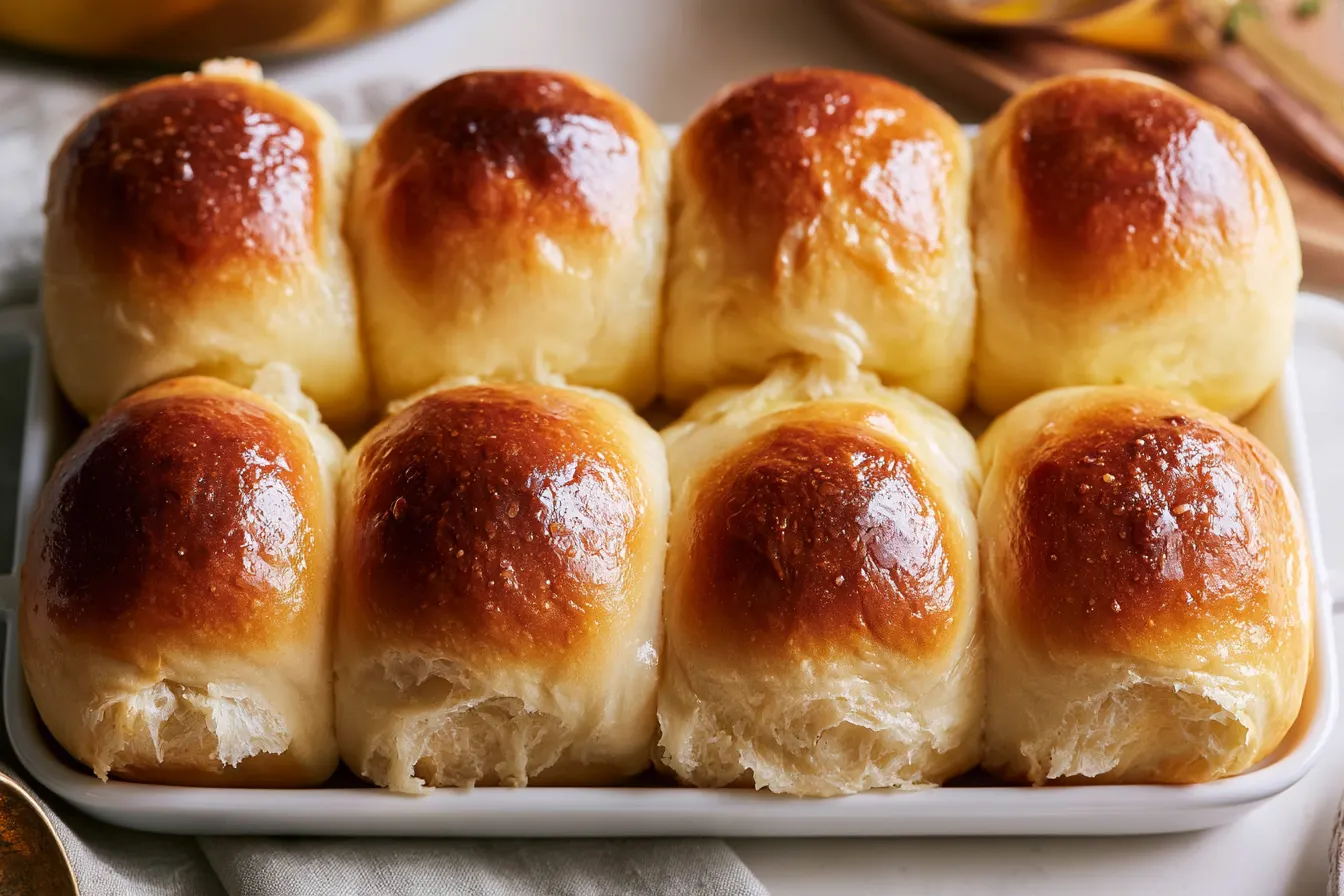
Have you ever baked something and just *known* it was going to be perfect the moment the aroma started wafting through the house? That’s exactly how I feel every single time I pull a batch of these ultra-soft milk bread dinner rolls from the oven. The scent of warm, slightly sweet, buttery bread is simply irresistible, a comforting promise of what’s to come.

Why go through this extra step? The science behind it is fascinating. Heating the flour and liquid gelatinizes the starches in the flour. This gelatinization allows the flour to absorb and retain much more liquid than it would in its raw state. When this super-hydrated paste is incorporated into your dough, it results in a bread that is incredibly soft, moist, and has an extended shelf life.
Think about it: more moisture means a softer crumb, and because that moisture is locked within the gelatinized starches, it doesn’t evaporate as quickly during baking or while the bread sits. This translates to dinner rolls that remain wonderfully tender and fresh for several days, a huge win for anyone who loves baking ahead or enjoys leftovers.
Gather Your Baking Arsenal: Ingredients for Perfect Rolls
Making these ultra-soft milk bread dinner rolls requires just a few basic pantry staples, but each plays a crucial role in achieving that signature texture. Don’t be tempted to swap out ingredients unless specified, as the ratios are key to the Tangzhong method’s success.For the Tangzhong Starter:
- All-purpose flour: Just a small amount to create our magical paste.
- Water or milk: Either works, but milk adds a touch more richness.
For the Dough:
- Warm milk: Activates the yeast and adds richness.
- Granulated sugar: Feeds the yeast and contributes to flavor and browning.
- Active dry yeast: The leavening agent that makes our rolls rise.
- All-purpose flour: The main structure of our bread.
- Salt: Essential for flavor balance.
- Large egg: Adds richness, color, and helps with structure.
- Unsalted butter: Softened, for that rich, tender, melt-in-your-mouth quality.
For the Egg Wash:
- Large egg yolk: For a beautiful golden-brown crust.
- Milk: Thins the yolk for easy brushing and a glossy finish.
Crafting Your Dream Dinner Rolls: A Step-by-Step Journey
This recipe is divided into a few key stages, but don’t let that intimidate you. Each step is straightforward, and the result is well worth the effort.Step 1: Whisk Up the Tangzhong
In a small saucepan, combine the flour and water/milk for the Tangzhong. Whisk until smooth. Place the saucepan over medium-low heat and cook, stirring constantly with a whisk or rubber spatula, until the mixture thickens to a paste-like consistency, resembling wallpaper paste. This usually takes about 3-5 minutes. It should register 149°F (65°C) on an instant-read thermometer. Transfer the Tangzhong to a small bowl, cover it directly with plastic wrap (to prevent a skin from forming), and let it cool to room temperature. This is a crucial step – don’t add it to the yeast mixture while hot!
Step 2: Activate the Yeast
In a large bowl (or the bowl of a stand mixer), combine the warm milk and a tablespoon of the granulated sugar. Sprinkle the active dry yeast over the top. Give it a gentle stir and let it sit for 5-10 minutes, or until foamy. This indicates your yeast is active and ready to work its magic. If it doesn’t foam, your yeast might be old, or your milk might not have been at the right temperature.
Step 3: Mix the Dough
Add the cooled Tangzhong, remaining sugar, salt, egg, and about half of the all-purpose flour to the yeast mixture. Mix on low speed with a dough hook (or with a sturdy spoon if kneading by hand) until just combined. Gradually add the remaining flour, mixing until a shaggy dough forms. Increase the speed to medium-low and knead for 5 minutes. The dough will be quite sticky at this point.
Step 4: Incorporate the Butter
With the mixer still running on medium-low, add the softened unsalted butter one tablespoon at a time, waiting until each piece is mostly incorporated before adding the next. Once all the butter is in, increase the speed to medium and knead for another 10-15 minutes. The dough should become smooth, elastic, and pull away from the sides of the bowl. It will still be soft and slightly tacky, but not sticky. If kneading by hand, this process will take closer to 20-25 minutes. Tip: To check if your dough is properly kneaded, perform the “windowpane test.” Pinch off a small piece of dough and gently stretch it. If you can stretch it thin enough to see light through it without it tearing, it’s ready!
Step 5: First Rise (Bulk Fermentation)
Lightly grease a large bowl with a little oil. Transfer the kneaded dough to the bowl, turning it once to coat. Cover the bowl tightly with plastic wrap or a clean kitchen towel. Let the dough rise in a warm place for 1.5 to 2 hours, or until it has doubled in size. The exact time will depend on the temperature of your kitchen.

Step 6: Shape the Rolls
Gently punch down the risen dough to release the air. Turn it out onto a lightly floured surface. Divide the dough into 12-15 equal pieces, depending on your desired roll size. For uniform rolls, you can weigh each piece (around 60-70g each). Take each piece and gently shape it into a smooth, tight ball. You can do this by cupping the dough with your hand and rolling it against the counter in a circular motion, or by pinching the edges underneath to create a smooth top.
Step 7: Second Rise (Proofing)
Arrange the shaped rolls in a greased 9×13-inch baking pan, leaving a little space between them (they will expand). Cover the pan loosely with plastic wrap or a clean kitchen towel. Let the rolls rise again in a warm place for 45-60 minutes, or until they look puffy and have nearly doubled in size. They should feel very light and airy.

Step 8: Prepare for Baking & Bake
Preheat your oven to 375°F (190°C) during the last 15 minutes of the second rise. In a small bowl, whisk together the egg yolk and milk for the egg wash. Gently brush the tops of the risen rolls with the egg wash, being careful not to deflate them. Bake for 18-22 minutes, or until the tops are golden brown and the internal temperature reaches 200-205°F (93-96°C) with an instant-read thermometer. Note: If the tops are browning too quickly, you can loosely tent the pan with aluminum foil for the last few minutes of baking.
Step 9: Cool and Serve
Once baked, remove the pan from the oven. If desired, you can brush the hot rolls with a little melted butter for extra shine and flavor. Let the rolls cool in the pan for 5-10 minutes before transferring them to a wire rack to cool slightly further. Serve warm and enjoy the incredible softness!
Common Questions About Milk Bread Rolls
Even experienced bakers have questions, and these rolls are no exception! Here are some common queries and their answers to help you achieve perfect results every time.What if my Tangzhong is too thick or too thin?
If your Tangzhong is too thick, you might have cooked it too long or used too much flour. If it’s too thin, it might not have cooked long enough. As long as it’s a thick, pudding-like consistency, it’s fine. The key is reaching that 149°F (65°C) mark to ensure starch gelatinization.
Can I make these milk bread dinner rolls ahead of time?
Absolutely! After the first rise and shaping, you can cover the pan of shaped rolls tightly with plastic wrap and refrigerate overnight (up to 12-18 hours). The next day, let them come to room temperature and complete their second rise (this might take 1-2 hours) before baking as directed.
My dough isn’t rising – what went wrong?
The most common culprit is inactive yeast or an incorrect milk temperature. Ensure your milk is warm (105-115°F / 40-46°C), not hot, which can kill the yeast. If your yeast didn’t foam in Step 2, it’s best to start with a fresh batch of yeast.
Can I use whole wheat flour for these rolls?
While you can substitute a small portion (up to 25%) of the all-purpose flour with whole wheat, it will change the texture. Whole wheat flour absorbs more liquid and has a higher protein content, which can result in a denser, less ultra-soft roll. For the classic milk bread texture, stick with all-purpose flour.
How do I store leftover milk bread rolls?
Store cooled rolls in an airtight container or a large zip-top bag at room temperature for up to 3-4 days. Thanks to the Tangzhong, they stay incredibly soft! You can also freeze baked and cooled rolls for up to 2-3 months. Thaw at room temperature and warm gently in the oven or microwave before serving.
The Magic of Softness: Why This Recipe Shines
Many dinner roll recipes promise softness, but these ultra-soft milk bread dinner rolls truly deliver on that promise and then some. The Tangzhong method is undoubtedly the star here, but it’s the combination of specific ingredients and techniques that creates such an extraordinary result.We’re using a higher ratio of milk to water, which contributes to a richer, more tender crumb. The addition of a whole egg and a generous amount of butter also plays a significant role in achieving that luxurious, almost brioche-like texture. These ingredients not only add flavor but also interfere with gluten development just enough to keep the rolls from becoming tough, while still allowing for a beautiful rise.
Proper kneading is another unsung hero. Kneading develops the gluten strands, which are essential for creating the structure that traps air bubbles, leading to a light and airy texture. It also ensures the dough is smooth and elastic, making it easier to handle and shape. The long kneading time in this recipe might seem like a lot, but it’s what gives these rolls their incredible chew and stretch.
Finally, patience during the two rising periods is paramount. These fermentation steps allow the yeast to produce carbon dioxide, which creates air pockets, and also develops complex flavors in the dough. Rushing this process will result in denser, less flavorful rolls. Trust the process, and you’ll be rewarded with rolls that are not just soft, but truly transcendent.
Serving Suggestions and Flavor Variations
These milk bread dinner rolls are so good, they honestly don’t need much accompaniment. A simple pat of butter is usually all it takes to make them disappear from the table. However, their versatility makes them perfect for a wide range of meals and flavor twists!For a savory twist, try adding a tablespoon of dried herbs like rosemary or thyme to the dough during the last few minutes of kneading. A sprinkle of garlic powder and grated Parmesan cheese on top before baking would also be divine. For a touch of sweetness, incorporate a teaspoon of cinnamon and a handful of raisins or dried cranberries into the dough. You could even swirl in a cinnamon-sugar mixture before shaping for a pull-apart sweet roll effect.
They are, of course, the quintessential accompaniment to holiday meals – Thanksgiving, Christmas, Easter – pairing beautifully with everything from roasted turkey to glazed ham. But don’t relegate them just to special occasions! These rolls make fantastic sliders for barbecues, incredible mini sandwiches for lunchboxes, or even a delightful side for a hearty stew on a chilly evening. Imagine them dipped into a rich beef bourguignon or sopping up the last bits of gravy – pure comfort!
They’re also perfect for breakfast. Slice them in half, toast lightly, and spread with jam or honey. Or, for a truly decadent treat, turn day-old rolls into the most amazing French toast. Their tender crumb soaks up the custard beautifully, resulting in a custardy interior and a perfectly golden exterior.
Understanding the Nutrition Behind Your Rolls
While these rolls are a treat, it’s always good to have an idea of what you’re enjoying. Here’s a general nutritional breakdown, which can vary slightly based on specific ingredients and portion sizes.| Nutrient | Amount Per Roll (approx.) |
|---|---|
| Calories | 220 kcal |
| Protein | 6g |
| Fat | 9g |
| Saturated Fat | 5g |
| Carbohydrates | 28g |
| Fiber | 1g |
| Sugar | 4g |
| Sodium | 200mg |
| Cholesterol | 40mg |
These values are estimates and can fluctuate depending on brands of ingredients used and exact serving sizes. Enjoy them as part of a balanced meal!

Ultra-Soft Milk Bread Dinner Rolls
Incredibly soft, fluffy milk bread dinner rolls using the Tangzhong method for extended freshness. Perfect for any meal!
📝 Ingredients
👩🍳 Instructions
- 11. Prepare the Tangzhong: In a small saucepan, whisk together 2 tbsp flour and 1/4 cup water or milk until smooth. Cook over medium-low heat, stirring constantly, until the mixture thickens to a paste (like pudding). It should reach 149°F (65°C). Transfer to a small bowl, cover directly with plastic wrap, and let cool to room temperature.
- 22. Activate Yeast: In the bowl of a stand mixer, combine warm milk and 1 tbsp granulated sugar. Sprinkle yeast over top. Let sit 5-10 minutes until foamy.
- 33. Mix Dough: Add the cooled Tangzhong, remaining sugar, salt, egg, and half of the all-purpose flour to the yeast mixture. Mix on low speed with a dough hook until combined. Gradually add remaining flour, mixing until a shaggy dough forms. Knead on medium-low for 5 minutes.
- 44. Add Butter: With mixer running, add softened butter one tablespoon at a time, incorporating each before adding the next. Increase speed to medium and knead for 10-15 minutes until dough is smooth, elastic, and pulls away from the sides of the bowl. (Dough will be soft and slightly tacky).
- 55. First Rise: Lightly grease a large bowl. Transfer dough, turning once to coat. Cover with plastic wrap and let rise in a warm place for 1.5-2 hours, or until doubled in size.
- 66. Shape Rolls: Gently punch down dough. Turn onto a lightly floured surface and divide into 12-15 equal pieces. Shape each piece into a smooth, tight ball. Arrange in a greased 9x13-inch baking pan.
- 77. Second Rise: Cover pan loosely with plastic wrap and let rolls rise in a warm place for 45-60 minutes, or until puffy and nearly doubled.
- 88. Bake: Preheat oven to 375°F (190°C) during the last 15 minutes of the rise. Whisk egg yolk and 1 tbsp milk for egg wash. Gently brush tops of rolls. Bake for 18-22 minutes, until golden brown and internal temperature is 200-205°F (93-96°C).
- 99. Cool & Serve: Remove from oven. Optionally, brush with melted butter. Cool in pan for 5-10 minutes, then transfer to a wire rack. Serve warm.
💡 Notes
For best results, ensure your Tangzhong is fully cooled before adding to the dough. Dough can be refrigerated overnight after shaping for a slower second rise. Store leftovers in an airtight container for up to 3-4 days or freeze for longer storage.