


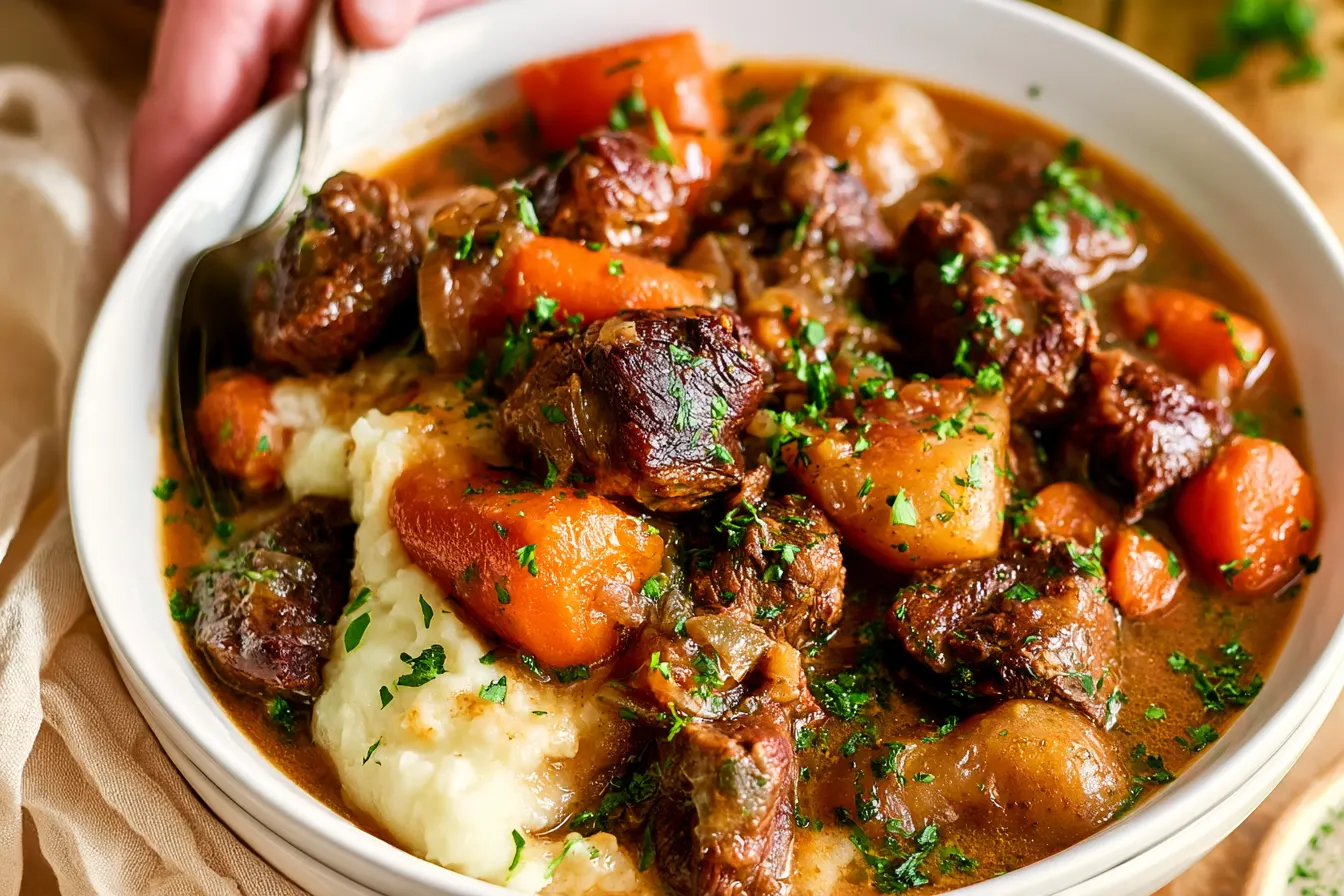
There’s something inherently magical about a simmering pot on the stove, especially when the weather outside is doing its best impression of a blustery Irish winter. That rich, savory scent curling through the kitchen? It’s more than just dinner; it’s a promise of warmth, comfort, and a truly satisfying meal. And when it comes to delivering on that promise, few dishes can hold a candle to a proper, hearty Irish Stew.
Forget everything you think you know about bland, watery stews. This isn’t that. This recipe is about deep, slow-cooked flavors, tender chunks of meat and vegetables, and a broth so rich you’ll want to drink it straight from the bowl. It’s the kind of dish that makes you slow down, gather around the table, and genuinely enjoy every single bite.
Whether you’re celebrating St. Patrick’s Day, looking for the ultimate Sunday supper, or just craving a hug in a bowl, this traditional Irish Stew is an absolute winner. It’s surprisingly simple to put together, letting time and a low heat do most of the heavy lifting. You can even let the oven or slow cooker work its magic!

When I think of comfort food, my mind often drifts to dishes that have a story, a history, and a soul. Irish Stew is precisely one of those. Originating as a peasant dish, it traditionally made use of whatever was available – often mutton, potatoes, and onions. Over centuries, it evolved, adapting to regional tastes and ingredients, yet always retaining its core identity: simple, hearty, and deeply nourishing. This particular rendition leans into those traditional roots but adds a touch of modern flair to ensure maximum flavor.
Why This Irish Stew Recipe Will Become Your Favorite
You might be wondering, “What makes *this* Irish Stew so special?” It’s all in the details, my friends. We’re talking about building layers of flavor from the very first step, ensuring that every spoonful is packed with a delicious punch. From properly browning the meat to choosing the right vegetables, each element plays a crucial role.
Unlike some recipes that can yield a somewhat thin broth, we’re aiming for a luscious, slightly thickened sauce that clings beautifully to the meat and veggies. And while some purists might argue against it, a touch of Guinness or a good stout adds an incredible depth that truly sets this stew apart.
Essential Ingredients for a Traditional Irish Stew
Gathering your ingredients is the first step to creating culinary magic. Quality matters here, especially when you have so few components doing such heavy lifting. Think fresh, think local if you can, and you’ll taste the difference.
For the Heart of the Stew
- Lamb or Beef Stew Meat: I prefer lamb shoulder for its authentic flavor and incredible tenderness when slow-cooked, but beef chuck roast works beautifully too. Cut into 1.5-inch chunks.
- Yellow Onions: A couple of large ones, roughly chopped, form the aromatic base. They sweeten beautifully as they cook down.
- Carrots: Peeled and cut into thick, rustic rounds or chunks. They add sweetness and a lovely color.
- Potatoes: Waxy varieties like Yukon Gold or red potatoes hold their shape best, but a mix of waxy and a few starchy Russets can give you both texture and a slight thickening effect. Cut into large chunks.
- Garlic: Freshly minced, for that unmistakable aromatic kick.
- All-Purpose Flour: Just a couple of tablespoons to coat the meat, helping it brown better and subtly thickening the stew.
- Tomato Paste: A small tube of this concentrated goodness adds umami and depth without making the stew taste overtly tomato-y.
- Beef Broth or Stock: Good quality, low-sodium beef broth is key. If you have homemade, even better!
- Guinness or Stout: This is my secret weapon. The dark, malty notes are incredible with the lamb or beef. Don’t worry, the alcohol cooks off, leaving only flavor.
- Fresh Thyme & Rosemary: Woody herbs that stand up to long cooking. Tie them in a bundle for easy removal.
- Bay Leaves: Another essential aromatic for depth.
- Salt and Freshly Ground Black Pepper: Seasoning throughout is crucial, not just at the end.
- Olive Oil or Vegetable Oil: For browning the meat.
Serving Suggestions & Garnish
- Fresh Parsley: A sprinkle of chopped fresh parsley at the end brightens everything up and adds a pop of color.
- Crusty Bread: Absolutely essential for soaking up every last drop of that glorious gravy.
- Creamy Mashed Potatoes or Colcannon: A traditional and utterly delicious pairing.

Getting Started: Preparing Your Irish Stew
Patience is a virtue, especially when making a stew. Don’t rush the browning of the meat or the sautéing of the vegetables; these steps build the foundation of flavor for your magnificent Irish Stew.
Step-by-Step Cooking Guide
1. Prep the Meat and Veggies
Pat your lamb or beef stew meat *very* dry with paper towels. This is crucial for a good sear! Toss the meat with flour, salt, and pepper until evenly coated. Set aside your chopped onions, carrots, and potatoes.
2. Brown the Meat in Batches
Heat a tablespoon or two of oil in a large Dutch oven or heavy-bottomed pot over medium-high heat. Brown the floured meat in batches, making sure not to overcrowd the pot. You want a deep, golden-brown crust on all sides. Remove the browned meat to a plate and set aside. Repeat until all meat is browned.
Tip: Don’t try to stir the meat too soon. Let it sit undisturbed for a few minutes on each side to develop that beautiful crust. That browning equals flavor!
3. Sauté the Aromatics
Reduce the heat to medium. Add a little more oil if needed, then toss in your chopped onions and carrots. Sauté for 5-7 minutes, scraping up any browned bits from the bottom of the pot, until the onions are softened and translucent. Add the minced garlic and tomato paste, stirring constantly for another minute until fragrant.
4. Deglaze and Build the Broth
Pour in the Guinness or stout, scraping vigorously to release all those delicious browned bits (fond) from the bottom of the pot. Let it simmer for a couple of minutes until it reduces slightly. Return the browned meat to the pot. Add the beef broth, fresh thyme and rosemary bundle, and bay leaves. Stir well to combine.
5. Simmer Until Tender (Oven or Stovetop)
Bring the stew to a gentle simmer on the stovetop. Cover the pot with a tight-fitting lid. You can continue to simmer it gently on the stovetop over low heat for 1.5-2 hours, or transfer it to a preheated oven at 325°F (160°C) for 1.5-2.5 hours, or until the meat is fork-tender. About 45 minutes before the end of cooking, stir in the potato chunks. Continue cooking until the potatoes are tender.
Note: If you’re using a slow cooker, brown the meat and sauté aromatics as directed, then transfer everything to the slow cooker. Cook on low for 6-8 hours or on high for 3-4 hours, adding potatoes for the last 1.5-2 hours.
6. Finish and Serve
Once the meat and vegetables are tender, remove the herb bundle and bay leaves. Taste and adjust seasoning with salt and pepper as needed. If the stew is too thin, you can mash a few of the cooked potato chunks against the side of the pot to naturally thicken it. Ladle into warm bowls and garnish generously with fresh parsley. Serve hot with crusty bread or mashed potatoes.

Making it Ahead & Storing Leftovers
One of the best things about Irish Stew is that it tastes even better the next day! The flavors have more time to meld and deepen, making it an ideal make-ahead meal for entertaining or busy weeknights.
Prep Today, Enjoy Tomorrow
You can prepare the entire stew a day or two in advance. Once cooked, let it cool completely, then transfer it to an airtight container and refrigerate. Reheat gently on the stovetop over low heat, stirring occasionally, until warmed through. You might need to add a splash of extra broth or water if it’s too thick.
Freezing for Later
Irish Stew freezes beautifully! Allow it to cool completely, then transfer to freezer-safe containers or heavy-duty freezer bags, leaving a little headspace for expansion. It will keep well in the freezer for up to 3 months. Thaw overnight in the refrigerator before reheating.
Answering Your Irish Stew Questions
Even the simplest recipes can spark a few questions. Here are some common queries about making the perfect Irish Stew:
Can I use a different type of meat for Irish Stew?
Absolutely! While lamb is traditional, beef chuck roast is an excellent alternative and often more readily available. Pork shoulder can also work, though it will give a slightly different flavor profile. Just ensure whatever cut you choose is suitable for slow cooking.
What’s the best way to thicken Irish Stew?
My preferred method is to coat the meat in flour before browning, which subtly thickens the stew. You can also mash a few of the cooked potato chunks against the side of the pot at the end of cooking for a natural thickening. For a more pronounced effect, make a slurry of 1-2 tablespoons of cornstarch mixed with an equal amount of cold water, then stir it into the simmering stew until thickened.
Can I make this Irish Stew without alcohol?
Certainly! If you prefer not to use Guinness or stout, simply substitute that amount with additional beef broth. While the beer adds a wonderful depth, the stew will still be incredibly flavorful without it.
My stew meat isn’t getting tender. What went wrong?
The most common culprit for tough stew meat is not cooking it long enough or not at a low enough temperature. Stew meat needs time – sometimes 2-3 hours – to break down and become fork-tender. If yours is still tough, simply keep simmering it (covered) until it reaches the desired tenderness. Don’t rush it!
What are some good side dishes for Irish Stew?
Beyond the classic crusty bread, Irish Stew pairs wonderfully with creamy mashed potatoes, traditional Colcannon (mashed potatoes with cabbage or kale), or a simple side salad to cut through the richness. Roasted root vegetables like parsnips or extra carrots are also a lovely complement.
Nutrition Notes
While this is a hearty, comforting dish, it’s also packed with wholesome ingredients. The lean protein from the lamb or beef, combined with fiber-rich potatoes and carrots, makes for a balanced and satisfying meal. Portion control is always key, but you can feel good about serving this nutrient-dense stew.
| Nutrient | Amount (per serving) |
|---|---|
| Calories | 350 kcal |
| Protein | 25g |
| Fat | 12g |
| Saturated Fat | 4g |
| Carbohydrates | 35g |
| Fiber | 3g |
| Sugar | 5g |
| Sodium | 450mg |
| Cholesterol | 65mg |

Hearty Irish Stew
A classic, comforting Irish Stew recipe featuring tender lamb or beef, root vegetables, and a rich, savory broth. Perfect for a cozy meal.
📝 Ingredients
👩🍳 Instructions
- 1Pat the lamb or beef chunks very dry with paper towels. In a large bowl, toss the meat with flour, 1 tsp salt, and 1/2 tsp black pepper until evenly coated.
- 2Heat olive oil in a large Dutch oven or heavy-bottomed pot over medium-high heat. Brown the floured meat in batches, ensuring not to overcrowd the pot. Cook until a deep golden-brown crust forms on all sides. Remove browned meat to a plate and set aside.
- 3Reduce heat to medium. Add chopped onions and carrots to the pot (add a little more oil if needed). Sauté for 5-7 minutes, scraping up any browned bits from the bottom, until onions are softened. Stir in minced garlic and tomato paste, cooking for 1 minute until fragrant.
- 4Pour in the Guinness or stout, scraping the bottom of the pot vigorously to deglaze. Let it simmer for 2 minutes to reduce slightly. Return the browned meat to the pot.
- 5Add beef broth, the tied bundles of fresh thyme and rosemary, and bay leaves. Stir everything together. Bring the stew to a gentle simmer on the stovetop.
- 6Cover the pot with a tight-fitting lid. Either continue to simmer on low heat on the stovetop for 1.5-2 hours, or transfer to a preheated oven at 325°F (160°C) for 1.5-2.5 hours, or until the meat is fork-tender.
- 7About 45 minutes before the end of cooking (or after 1.5 hours if cooking for longer), stir in the potato chunks. Continue cooking until the potatoes are tender.
- 8Remove the herb bundles and bay leaves. Taste and adjust seasoning with additional salt and pepper as needed. Ladle into warm bowls and garnish generously with fresh chopped parsley. Serve hot with crusty bread or mashed potatoes.
💡 Notes
For a thicker stew, mash a few cooked potato chunks against the side of the pot, or create a cornstarch slurry (1 tbsp cornstarch + 1 tbsp cold water) and stir it into the simmering stew. This stew tastes even better the next day; leftovers can be stored in an airtight container in the refrigerator for 3-4 days or frozen for up to 3 months. Thaw overnight in the fridge before reheating.