


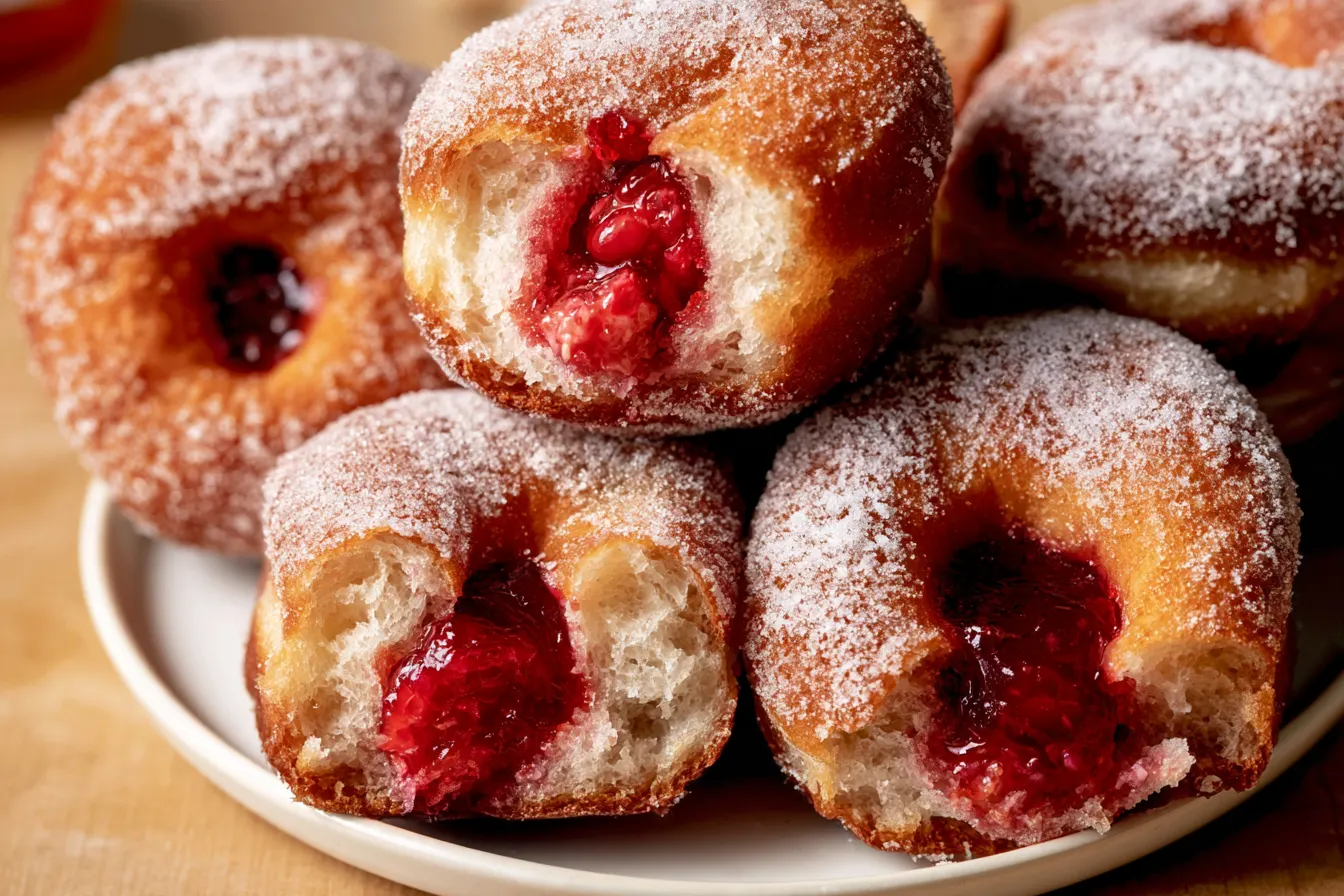
Few things evoke such a deep sense of childhood nostalgia quite like the aroma of freshly fried dough, especially when it’s destined to become a warm, sugar-dusted raspberry jelly donut. Forget those sad, often stale, store-bought versions. We’re talking about the real deal here: pillowy-soft, gloriously fluffy on the inside, and bursting with a vibrant, fruity filling that makes every bite an absolute dream.
- Gathering What You Need: The Sweet Components
- Crafting Your Delightful Donuts: A Step-by-Step Guide
- Common Questions About Making Donuts at Home
- Why This Recipe Stands Out for Raspberry Jelly Donuts
- Tips for Successful Frying and Filling
- Serving and Storing Your Homemade Treats
- Variations to Keep Things Exciting
This isn’t just any donut recipe; it’s a journey into the art of making a truly exceptional treat right in your own kitchen. While it might seem a bit ambitious to fry up your own donuts, I promise you, the results are so incredibly worth the effort. The satisfaction of biting into a warm, homemade jelly donut that you crafted from scratch is unparalleled.
What sets these raspberry jelly donuts apart is the tender milk-bread yeast dough, which fries up beautifully golden and provides the perfect canvas for that sweet-tart raspberry jam. Get ready to impress yourself and everyone lucky enough to snatch one fresh from the cooling rack!

There’s something truly magical about homemade donuts. The way the dough rises, the sizzle as it hits the hot oil, and that final dusting of sugar – it’s a whole experience. This recipe focuses on creating a light, airy dough that’s the ideal counterpoint to the rich, fruity raspberry filling. It’s a classic combination for a reason, and once you try these, you’ll understand why.
The secret to that incredible texture lies in a slightly enriched yeast dough, similar to what you might find in a good brioche or Japanese milk bread. This makes the finished donuts incredibly soft and keeps them tender even after they’ve cooled a bit. The addition of milk and butter contributes to a richer flavor and a more delicate crumb, ensuring your raspberry jelly donuts are truly melt-in-your-mouth delicious.
Beyond the dough, the choice of filling is crucial. While you can use any good quality jam, a vibrant raspberry jelly or preserves offers that perfect balance of sweetness and tartness that cuts through the richness of the fried dough. It’s a flavor profile that sings, making these donuts irresistible.
Gathering What You Need: The Sweet Components
Making delicious raspberry jelly donuts starts with the right ingredients. Quality really makes a difference here, especially for the raspberry filling, so choose a good quality jam or preserves. For the dough, freshness is key, especially for your yeast.
For the Dough:
- Active Dry Yeast: 2 ¼ teaspoons (one standard packet). Make sure it’s fresh!
- Granulated Sugar: ½ cup, divided. A little for activating the yeast, the rest for the dough.
- Warm Milk: 1 cup (about 105-115°F or 40-46°C). Whole milk works best for richness.
- All-Purpose Flour: 3 ½ cups, plus more for dusting. Don’t pack it in!
- Salt: 1 teaspoon. Balances the sweetness beautifully.
- Large Eggs: 2, at room temperature.
- Unsalted Butter: ½ cup (1 stick), melted and cooled slightly.
- Vanilla Extract: 1 teaspoon. A touch of warmth.
For the Filling & Finishing:
- Raspberry Jam or Preserves: 1 ½ cups. Look for one with good fruit content.
- Granulated Sugar: 1 cup, for dusting.
- Vegetable Oil or Canola Oil: For frying, about 6-8 cups (enough to fill your pot to 3-4 inches deep).
Having all your ingredients measured and ready before you begin will make the process much smoother. This is especially true for baking and frying, where timing can be everything. Don’t forget a good thermometer for checking your oil temperature – it’s a game-changer for perfectly cooked donuts!

Crafting Your Delightful Donuts: A Step-by-Step Guide
Don’t be intimidated by yeast dough! With a little patience and attention to detail, you’ll be making bakery-worthy raspberry jelly donuts in no time. The process is broken down into manageable steps, ensuring success.
Activating the Yeast
In a large bowl, combine the warm milk, 1 teaspoon of the granulated sugar, and the active dry yeast. Give it a gentle stir and let it sit for about 5-10 minutes. It should become foamy and bubbly – that’s how you know your yeast is alive and ready to work its magic. If it doesn’t foam, your yeast might be old, or your milk wasn’t the right temperature; start again.
Mixing the Dough
To the yeast mixture, add the remaining granulated sugar, salt, eggs, melted butter, and vanilla extract. Whisk briefly to combine. Gradually add the all-purpose flour, about a cup at a time, mixing with a wooden spoon or dough hook until a shaggy dough forms. You may not need all the flour – the dough should be soft and slightly sticky.
Kneading for Perfection
Turn the dough out onto a lightly floured surface. Knead for 8-10 minutes until the dough is smooth, elastic, and no longer sticky. It should spring back when gently poked. If using a stand mixer, use the dough hook on medium-low speed for 6-8 minutes. Tip: Resist the urge to add too much extra flour during kneading. A slightly sticky dough leads to a softer donut.
First Rise (The Bulk Fermentation)
Lightly grease a large clean bowl with a little oil. Place the dough in the bowl, turning it once to coat. Cover the bowl tightly with plastic wrap or a clean kitchen towel. Let it rise in a warm, draft-free place for 1-1.5 hours, or until doubled in size. This is where the flavor truly develops.
Shaping the Donuts
Gently punch down the risen dough to release the air. Turn it out onto a lightly floured surface. Using a rolling pin, roll the dough to about ½-inch thickness. Use a 2.5-3 inch round cookie cutter or a glass to cut out donut circles. You can re-roll the scraps once to cut out a few more. Place the cut donuts on a parchment-lined baking sheet, leaving some space between them.
Second Rise (Proofing)
Loosely cover the shaped donuts with plastic wrap or a clean kitchen towel. Let them rise again in a warm place for another 30-45 minutes, or until visibly puffy and about 1.5 times their original size. This final rise is crucial for light and airy donuts.

Frying the Donuts
Pour enough vegetable or canola oil into a large heavy-bottomed pot or Dutch oven to reach a depth of 3-4 inches. Heat the oil over medium heat to 350°F (175°C). Use a deep-fry thermometer to monitor the temperature accurately. While the oil heats, set up a cooling rack over a baking sheet lined with paper towels.
Carefully transfer 3-4 donuts into the hot oil, being careful not to overcrowd the pot. Fry for 1-2 minutes per side, or until golden brown and cooked through. Use a slotted spoon or spider to flip them. Note: Maintaining a consistent oil temperature is vital. If it gets too hot, the donuts will brown too quickly outside and be raw inside; too cool, and they’ll soak up too much oil and be greasy.
Cooling and Filling
Once fried, transfer the donuts to the prepared cooling rack to drain off excess oil. While still warm, roll them gently in the granulated sugar, ensuring an even coating. Let them cool completely before filling. To fill, use a small paring knife or a round piping tip to make a small hole in the side of each donut. Fit a piping bag with a long, thin nozzle (or just snip the end off a Ziploc bag) and fill it with your raspberry jam. Pipe generously into each donut until it feels pleasantly plump.
Serve immediately for the best experience. The warmth and freshness of a homemade jelly donut are truly unbeatable!
Common Questions About Making Donuts at Home
Donut making can seem daunting, but a few answers to common queries can smooth out the process. Here are some of the things people often ask about.
How do I know if my yeast is still good?
The best way to check is by “proofing” it. Combine the yeast with warm liquid (milk or water) and a pinch of sugar. If it becomes foamy and bubbly within 5-10 minutes, it’s active. If not, discard it and get new yeast. This simple step saves you from wasted time and ingredients!
What’s the best oil for frying donuts?
Neutral-flavored oils with a high smoke point are ideal. Vegetable oil, canola oil, sunflower oil, or peanut oil are all excellent choices. Avoid olive oil or butter, as they have lower smoke points and can impart unwanted flavors.
My donuts are soaking up too much oil. What went wrong?
This is usually a sign that your oil temperature is too low. When the oil isn’t hot enough, the dough cooks slowly and absorbs more fat before it has a chance to crisp up. Always use a thermometer to ensure your oil stays around 350°F (175°C). Also, don’t overcrowd the pot, as this can drop the oil temperature significantly.
Can I make the dough ahead of time?
Yes! You can prepare the dough up to the first rise. After the first rise, punch it down, cover it tightly with plastic wrap, and refrigerate it overnight (up to 24 hours). The next day, let it come to room temperature for about 30-60 minutes before shaping and proceeding with the second rise and frying.
How do I get a good, even coating of sugar?
The trick is to roll the donuts in sugar while they are still warm, but not piping hot. The residual heat helps the sugar stick. Don’t wait until they are completely cool, or the sugar won’t adhere properly. You can also place the sugar in a paper bag and gently shake a few donuts at a time for an even coating.
Why This Recipe Stands Out for Raspberry Jelly Donuts
Many donut recipes exist, but this one has been refined to deliver that perfect balance of texture, flavor, and ease. The use of a milk-enriched dough is a game-changer, providing a tender crumb that’s often missing in less careful recipes. It’s not overly sweet on its own, allowing the raspberry jelly to shine.
The double-rise method ensures maximum aeration, resulting in incredibly light and fluffy donuts. This attention to proofing time is critical for preventing dense, heavy results. When you bite into one, you’ll immediately notice the difference – a delicate, almost ethereal quality that makes these truly special.
Furthermore, the generous filling of vibrant raspberry jam creates a wonderful textural and flavor contrast. It’s not just a hint of fruit; it’s a delightful burst of sweet-tart goodness in every single bite. This recipe prioritizes both the quality of the dough and the abundance of the filling, ensuring a truly indulgent experience.
Tips for Successful Frying and Filling
Frying can seem intimidating, but with a few pointers, you’ll master it. Always use a heavy-bottomed pot, like a Dutch oven, for even heat distribution. This prevents hot spots and helps maintain a consistent oil temperature, which is the most critical factor for perfectly fried donuts.
When it comes to filling, don’t be shy! A generous amount of raspberry jelly is what makes these truly satisfying. If you don’t have a piping bag with a long nozzle, you can still fill them. Just use a small spoon to carefully push the jam into the hole you’ve made. It might be a little messier, but just as delicious.
Consider the temperature of your jam as well. If it’s too cold and stiff, it will be harder to pipe. Let it sit at room temperature for a bit to soften, or even warm it gently in the microwave for a few seconds until it’s more pliable, but not hot.
Serving and Storing Your Homemade Treats
These raspberry jelly donuts are absolutely best served warm, fresh from the kitchen. The warmth of the dough combined with the slightly softened jam is pure bliss. Consider them an instant indulgence rather than something to make far in advance for a party.
If you do have leftovers (a rare occurrence!), store them in an airtight container at room temperature for up to 2 days. The sugar coating might absorb some moisture and disappear, and the dough will lose some of its initial freshness, but they’ll still be tasty. Avoid refrigerating them, as this can dry out the dough.
To refresh leftover donuts, a quick 10-15 seconds in the microwave can bring back some of their warmth and softness. However, the true magic lies in that fresh-from-the-fryer experience, so plan to enjoy most of them on the day they’re made.
Variations to Keep Things Exciting
While raspberry jelly donuts are a classic, there’s always room for playful variations. Don’t be afraid to experiment with different fillings. A good quality apricot, strawberry, or even a lemon curd would be absolutely delightful. Just ensure your chosen filling isn’t too thin, or it will leak out.
Instead of a simple sugar coating, you could try a cinnamon sugar mixture for a slightly spiced twist. Combine granulated sugar with a teaspoon or two of ground cinnamon. For an even more decadent treat, a light drizzle of vanilla glaze over the sugar-dusted donuts would be heavenly.
For a truly unique experience, consider making your own homemade raspberry compote for the filling. It takes a little extra effort but offers a fresher, more intense fruit flavor. Simply simmer fresh or frozen raspberries with a little sugar and lemon juice until thickened, then cool completely before using.

Homemade Raspberry Jelly Donuts
Pillowy-soft, sugar-dusted raspberry jelly donuts with a generous fruit filling. A cozy, nostalgic, homemade treat.
📝 Ingredients
👩🍳 Instructions
- 1In a large bowl, combine warm milk, 1 teaspoon granulated sugar, and yeast. Stir gently and let sit for 5-10 minutes until foamy.
- 2Add remaining sugar, salt, eggs, melted butter, and vanilla to the yeast mixture. Whisk to combine.
- 3Gradually add flour, mixing until a shaggy dough forms. Turn onto a lightly floured surface and knead for 8-10 minutes until smooth and elastic (or use a stand mixer with a dough hook for 6-8 minutes).
- 4Lightly grease a clean bowl, place dough inside, turning to coat. Cover with plastic wrap and let rise in a warm, draft-free place for 1-1.5 hours, or until doubled in size.
- 5Gently punch down dough. Roll to ½-inch thickness on a lightly floured surface. Cut out 2.5-3 inch circles using a cookie cutter. Place on parchment-lined baking sheets.
- 6Loosely cover shaped donuts and let rise for another 30-45 minutes, or until puffy.
- 7Heat 3-4 inches of vegetable oil in a heavy-bottomed pot to 350°F (175°C).
- 8Carefully fry 3-4 donuts at a time for 1-2 minutes per side, until golden brown. Transfer to a wire rack over paper towels to drain.
- 9While still warm, roll donuts in granulated sugar to coat evenly. Let cool completely.
- 10Once cool, use a small knife or piping tip to make a hole in the side of each donut. Fill a piping bag with raspberry jam and generously pipe into each donut.
- 11Serve immediately and enjoy!
💡 Notes
Ensure your yeast is fresh for a good rise. Maintain consistent oil temperature for best frying results. Donuts are best enjoyed fresh but can be stored in an airtight container at room temperature for up to 2 days. Avoid refrigerating.