


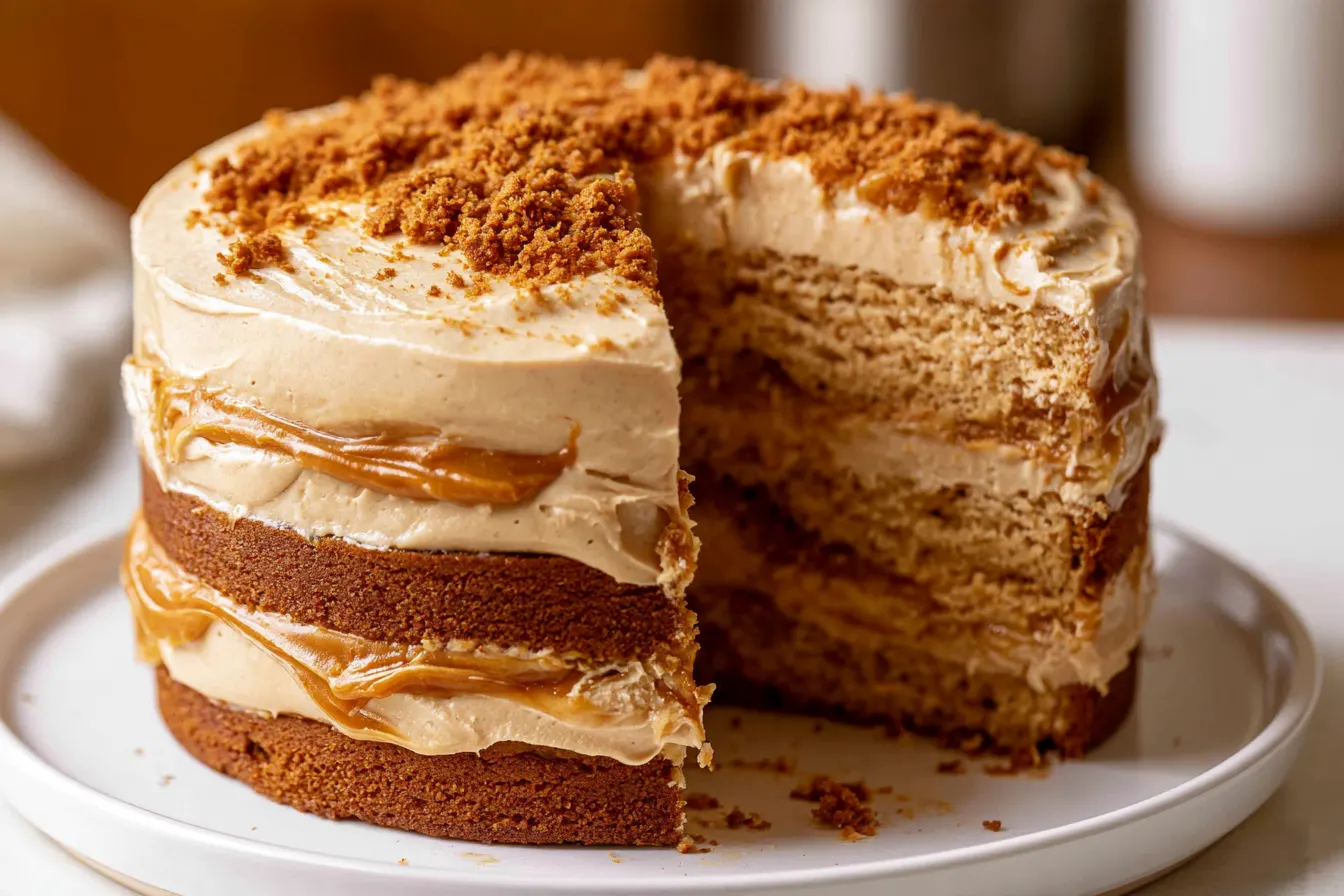
There’s just something about that first whiff of a Biscoff cookie — that warm, spiced caramel aroma that instantly transports you to a cozy cafe, even if you’re just standing in your own kitchen. It’s a scent that promises something truly special. So, when I set out to create a dessert that could truly capture that magic, I knew it had to be more than just a simple cake. It had to be an experience, a symphony of that distinct flavor. And that, my friends, is how this ultimate Biscoff cookie butter cake came to be.
- Cracking the Code: What Makes This Biscoff Cake So Irresistible?
- Gather Your Supplies: Ingredients for Biscoff Cake Perfection
- Let’s Get Baking: Crafting Your Masterpiece
- Bringing It All Together: Assembling Your Biscoff Masterpiece
- Troubleshooting Your Biscoff Cake
- FAQ: All Your Biscoff Cake Questions Answered
- Sweet Endings: A Cake to Remember

Cracking the Code: What Makes This Biscoff Cake So Irresistible?
I’ve baked my fair share of cakes over the years, and I’ve learned a thing or two about what makes a dessert truly stand out. For this Biscoff cookie butter cake, it wasn’t just about adding cookie butter to the batter and calling it a day. The goal was to build layers of flavor and texture that truly elevate the Biscoff experience. First, the cake layers themselves needed to be exceptionally moist and tender, a perfect canvas for the cookie butter. We achieve this by incorporating both Biscoff spread and buttermilk into the batter. The buttermilk reacts with the leavening agents, creating a lighter crumb, while the cookie butter keeps things rich and flavorful. It’s a delicate balance that results in a melt-in-your-mouth texture. Next, the frosting. A standard buttercream wouldn’t do here. We need something that echoes the Biscoff without being overly sweet. My secret? A cream cheese-based frosting, lightened with whipped cream, and, of course, generously flavored with more cookie butter. This creates a frosting that’s tangy, sweet, and incredibly smooth, cutting through the richness beautifully. Finally, the finishing touches: crushed Biscoff cookies for that delightful crunch and a generous drizzle of melted cookie butter between the layers and on top. These aren’t just garnishes; they’re essential textural and flavor elements that take this cake from great to absolutely unforgettable. Every forkful offers a new dimension.Gather Your Supplies: Ingredients for Biscoff Cake Perfection
Precision matters when baking, but don’t fret – these ingredients are common and easy to find. Make sure your butter and eggs are at room temperature; it makes a huge difference in how smoothly your batter comes together.For the Biscoff Cake Layers:
- 2 ¾ cups (350g) all-purpose flour
- 1 ½ teaspoons baking powder
- ¾ teaspoon baking soda
- ½ teaspoon salt
- 1 cup (226g) unsalted butter, softened
- 1 ½ cups (300g) granulated sugar
- ½ cup (128g) Biscoff cookie butter spread, creamy
- 3 large eggs, at room temperature
- 1 teaspoon pure vanilla extract
- 1 cup (240ml) buttermilk, at room temperature
For the Cookie Butter Cream Cheese Frosting:
- 12 ounces (340g) cream cheese, softened
- ½ cup (113g) unsalted butter, softened
- 1 ½ cups (180g) powdered sugar, sifted
- ¾ cup (192g) Biscoff cookie butter spread, creamy
- 1 teaspoon pure vanilla extract
- ¼ teaspoon salt
- ½ cup (120ml) heavy cream, cold
For the Assembly & Garnish:
- ½ cup (128g) Biscoff cookie butter spread, melted (for drizzling)
- 1 cup (about 15-20 cookies) Biscoff cookies, crushed

Let’s Get Baking: Crafting Your Masterpiece
Take your time with each step. Baking is a joy, not a race! Make sure your oven is preheated and your pans are prepped before you start mixing. This ensures an even bake and prevents any sticking.Prepare Your Pans
Preheat your oven to 350°F (175°C). Grease and flour three 8-inch round cake pans. Alternatively, line the bottoms with parchment paper rounds and spray the sides.
Whip Up the Cake Batter
In a medium bowl, whisk together the flour, baking powder, baking soda, and salt. Set aside. In a large bowl, using an electric mixer, cream together the softened butter and granulated sugar on medium speed until light and fluffy, about 3-4 minutes. Add the ½ cup Biscoff cookie butter spread and beat until well combined, scraping down the sides of the bowl as needed.
Beat in the eggs one at a time, incorporating each fully before adding the next. Stir in the vanilla extract. Gradually add the dry ingredients to the wet ingredients in three additions, alternating with the buttermilk, beginning and ending with the dry ingredients. Mix on low speed until just combined. Be careful not to overmix, as this can lead to a tough cake.
Tip: Overmixing develops gluten, which is great for bread but not for tender cakes. Stop mixing as soon as the last streaks of flour disappear.
Divide the batter evenly among the three prepared cake pans. You can use a kitchen scale for precision if you want perfectly even layers.
Bake the Cake Layers
Bake for 25-30 minutes, or until a wooden skewer inserted into the center comes out clean. The tops should be golden brown and spring back when lightly touched. Let the cake layers cool in their pans on a wire rack for 10-15 minutes before inverting them onto the rack to cool completely. Ensure they are completely cool before frosting, or your frosting will melt.
Craft the Creamy Cookie Butter Frosting
In a large bowl, beat the softened cream cheese and butter together on medium speed until smooth and creamy, about 2-3 minutes. Gradually add the sifted powdered sugar, mixing on low speed until combined, then increase to medium and beat until fluffy.
Stir in the ¾ cup Biscoff cookie butter spread, vanilla extract, and salt until well incorporated. In a separate cold bowl, whip the cold heavy cream until stiff peaks form. Gently fold the whipped cream into the Biscoff cream cheese mixture until just combined. Don’t overmix, or the frosting can lose its airiness.

Bringing It All Together: Assembling Your Biscoff Masterpiece
This is where the magic happens! A perfectly assembled cake is a joy to behold, and eat.Layer by Layer
Once your cake layers are completely cool, place one layer on your serving plate or cake stand. Spread about ¾ cup of the cookie butter frosting evenly over the top. Drizzle generously with about ¼ of the melted Biscoff spread. Sprinkle with a handful of crushed Biscoff cookies. Repeat with the second cake layer, more frosting, more melted Biscoff, and more crushed cookies.
The Grand Finale
Place the final cake layer on top. Use the remaining frosting to cover the top and sides of the cake. You can make it smooth with an offset spatula or create a rustic swirl pattern. Drizzle the remaining melted Biscoff over the top, letting some drip down the sides. Sprinkle the remaining crushed Biscoff cookies around the base or on top for extra flair.
Note: For cleaner drips, let your melted Biscoff cool slightly but still be pourable before drizzling. If it’s too hot, it will melt the frosting.
Chill the cake for at least 30 minutes before slicing to allow the frosting to set, making for cleaner cuts and a more stable cake.
Troubleshooting Your Biscoff Cake
Even experienced bakers run into snags sometimes! Here are a few common issues and how to avoid them or fix them.Why Did My Cake Layers Sink in the Middle?
This is often due to opening the oven door too early, letting out the heat, or not baking the cake long enough. Make sure to only open the oven door during the last 5-10 minutes of baking to check for doneness. Also, ensure your leavening agents (baking powder and soda) aren’t expired.
My Frosting Is Too Runny. What Went Wrong?
Likely culprits are cream cheese or butter that’s too warm, or overmixing the whipped cream into the cream cheese mixture. Ensure your cream cheese and butter are softened but still cool to the touch. If it gets too warm, pop it in the fridge for 15-20 minutes, then re-whip. Also, avoid over-folding the whipped cream – just enough to combine.
The Cake Tastes Dry. How Can I Prevent That Next Time?
A dry cake is usually an overbaked cake. Keep a close eye on the baking time and rely on the skewer test. Every oven is different, so your exact baking time might vary slightly from the recipe. Using accurate measurements, especially for flour, is also key. Too much flour can lead to a dry crumb.
FAQ: All Your Biscoff Cake Questions Answered
Got more questions? I’ve compiled answers to the most common queries about this delectable Biscoff cake.Can I make this Biscoff cake in different sized pans?
Yes, you can! For two 9-inch pans, baking time might be slightly less (around 20-25 minutes). For cupcakes, bake for about 18-22 minutes. You’ll yield about 24-30 cupcakes. Always adjust baking time and keep an eye on doneness.
What if I don’t have buttermilk?
No buttermilk? No problem! You can easily make a substitute. Add 1 tablespoon of white vinegar or lemon juice to a liquid measuring cup, then fill the rest of the cup with regular milk (dairy or non-dairy) to the 1-cup line. Let it sit for 5-10 minutes until it slightly curdles. Use this in place of the buttermilk.
How long does this Biscoff cake last and how should I store it?
This cake, with its cream cheese frosting, should be stored in an airtight container in the refrigerator. It will stay fresh for up to 4-5 days. For the best flavor and texture, let it come to room temperature for about 30 minutes before serving.
Can I freeze slices of the Biscoff cake?
Absolutely! This cake freezes beautifully. Wrap individual slices tightly in plastic wrap, then aluminum foil. Place them in a freezer-safe bag or container. They can be frozen for up to 2-3 months. Thaw overnight in the refrigerator, then bring to room temperature before enjoying.
Where can I find Biscoff cookie butter spread and cookies?
Biscoff cookie butter spread and the cookies (Lotus Biscoff) are widely available in most major grocery stores. Look for them in the cookie aisle, with other spreads like peanut butter, or sometimes in the international foods section.
Sweet Endings: A Cake to Remember
There are some desserts that just stick with you, long after the last crumb is gone. This Biscoff cookie butter cake is definitely one of them. It’s comforting, sophisticated, and packed with that unique spiced caramel flavor that makes Biscoff so beloved. Whether you’re baking it for a special occasion or just because you deserve a treat, I promise you won’t be disappointed. Go ahead, dive into this Biscoff dream. It’s worth every single moment in the kitchen, and every single delicious bite. Happy baking!
Ultimate Biscoff Cookie Butter Cake
A showstopping Biscoff cookie butter cake featuring moist cake layers, creamy Biscoff frosting, and crunchy cookie crumbs.
📝 Ingredients
👩🍳 Instructions
- 1Preheat oven to 350°F (175°C). Grease and flour three 8-inch round cake pans or line with parchment paper.
- 2In a medium bowl, whisk together flour, baking powder, baking soda, and salt. Set aside.
- 3In a large bowl, cream softened butter and granulated sugar with an electric mixer on medium speed until light and fluffy (3-4 minutes).
- 4Add ½ cup Biscoff cookie butter spread; beat until combined, scraping bowl sides.
- 5Beat in eggs one at a time, then stir in 1 teaspoon vanilla extract.
- 6Gradually add dry ingredients to wet in three additions, alternating with buttermilk, starting and ending with dry. Mix on low speed until just combined (do not overmix).
- 7Divide batter evenly among prepared pans. Bake 25-30 minutes, or until a wooden skewer comes out clean.
- 8Cool cake layers in pans on a wire rack for 10-15 minutes, then invert onto rack to cool completely.
- 9For frosting: In a large bowl, beat softened cream cheese and ½ cup butter on medium speed until smooth (2-3 minutes).
- 10Gradually add sifted powdered sugar; mix on low, then beat on medium until fluffy.
- 11Stir in ¾ cup Biscoff cookie butter spread, 1 teaspoon vanilla extract, and ¼ teaspoon salt until combined.
- 12In a separate cold bowl, whip cold heavy cream until stiff peaks form. Gently fold whipped cream into the Biscoff cream cheese mixture until just combined.
- 13To assemble: Place one cooled cake layer on your serving plate. Spread about ¾ cup frosting over top. Drizzle with ¼ of the melted Biscoff and sprinkle with crushed cookies.
- 14Repeat with the second cake layer. Place the final cake layer on top.
- 15Frost the top and sides of the cake with remaining frosting. Drizzle remaining melted Biscoff over the top, allowing some to drip down the sides.
- 16Sprinkle remaining crushed Biscoff cookies on top or around the base. Chill for at least 30 minutes before slicing and serving.
💡 Notes
Ensure all dairy and eggs are at room temperature for optimal batter consistency. For best results, chill the cake for at least 30 minutes before serving. Store leftovers in an airtight container in the refrigerator for up to 4-5 days. Cake layers can be baked a day in advance, wrapped tightly, and stored at room temperature.