


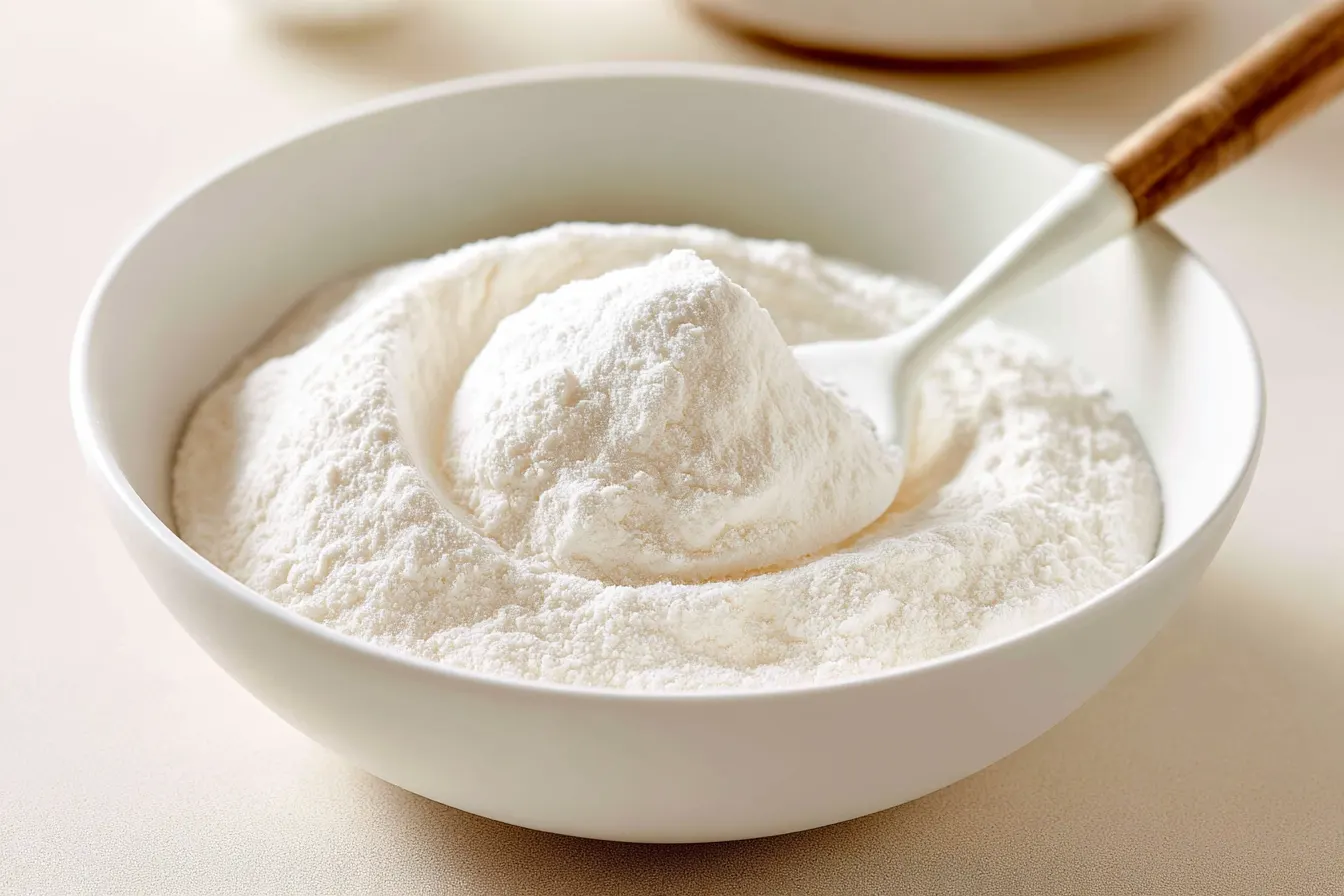
Ever been halfway through mixing up a batch of pancakes or a quick bread, only to realize your baking powder container is suspiciously light? Or worse, you open it, and it’s a solid, unusable block? Trust me, I’ve been there. That moment of panic can easily derail your baking plans, but what if I told you that a perfect baking powder substitute is probably already lurking in your pantry?

Cracking the Code: What Even *Is* Baking Powder?
Before we dive into replacing it, let’s quickly chat about what baking powder actually does. Think of it as a little magic potion for your doughs and batters. It’s a chemical leavening agent, meaning it creates gas (carbon dioxide) when mixed with liquid and/or heat, which then gets trapped in your batter, causing it to expand and rise. Baking powder is typically a mix of three things: an alkali (baking soda), an acid (like cream of tartar or sodium aluminum sulfate), and a starch (like cornstarch) to keep everything dry and prevent premature activation. The beauty of it is that it’s designed to provide a double lift – once when it gets wet, and again when it gets hot. So, when you’re looking for a substitute, you’re essentially trying to recreate that alkali-acid reaction to produce those bubbly gases.The Go-To Baking Powder Replacements
You’ve got options, and the best one depends on what you have on hand and what your recipe already contains. Here are the most reliable ways to make your own baking powder.Baking Soda & Cream of Tartar: The Classic Duo
This is hands down the most common and effective homemade baking powder. Cream of tartar is an acid, and baking soda is an alkali. When combined, they replicate the exact function of commercial baking powder. The Ratio: For every 1 teaspoon of baking powder your recipe calls for, use 1/2 teaspoon of cream of tartar and 1/4 teaspoon of baking soda. How to Use: Whisk these two ingredients together thoroughly before adding them to your dry ingredients. This ensures even distribution and proper leavening. This mixture acts as a single-acting baking powder, meaning it starts working as soon as it hits the liquid, so get your batter into the oven quickly! This combination is fantastic because it’s neutral in flavor and works well in almost any recipe calling for baking powder.Baking Soda & Lemon Juice or Vinegar: The Tangy Twist
If cream of tartar isn’t in your pantry, don’t fret! Any acid will do, and lemon juice or white vinegar are excellent choices. They provide the necessary acidity to react with baking soda. The Ratio: For every 1 teaspoon of baking powder, combine 1/4 teaspoon of baking soda with 1/2 teaspoon of lemon juice or white vinegar. How to Use: Add the baking soda to your dry ingredients, and then stir the lemon juice or vinegar into your wet ingredients. Combine wet and dry ingredients just before baking. The reaction is immediate and vigorous! Note: Be mindful that lemon juice or vinegar can impart a slight tang to your final product. This is often desirable in things like buttermilk biscuits or lemon poppy seed muffins, but perhaps less so in a delicate vanilla cake.
Baking Soda & Buttermilk (or Soured Milk): A Happy Coincidence
Many recipes that use baking powder also call for buttermilk. This is no accident! Buttermilk is naturally acidic, making it a perfect partner for baking soda. If your recipe *already* uses buttermilk and baking soda, it’s essentially already got a built-in leavening system. If it only calls for baking powder, you can adapt. The Ratio: For every 1 teaspoon of baking powder, use 1/4 teaspoon of baking soda and reduce the liquid in your recipe by 1/2 cup, replacing it with 1/2 cup of buttermilk. If you don’t have buttermilk, you can make your own by adding 1 tablespoon of white vinegar or lemon juice to a measuring cup, then filling the rest with regular milk to make 1/2 cup. Let it sit for 5-10 minutes until it slightly curdles. How to Use: Add the baking soda to your dry ingredients and the buttermilk to your wet ingredients. This swap works beautifully in pancakes, muffins, and quick breads where the slight tang of buttermilk is welcome.Baking Soda & Plain Yogurt: Creamy & Effective
Similar to buttermilk, plain yogurt (especially Greek yogurt) is acidic and can activate baking soda. This is a great option if you have some yogurt lingering in the fridge. The Ratio: For every 1 teaspoon of baking powder, use 1/4 teaspoon of baking soda and reduce your liquid by 1/2 cup, replacing it with 1/2 cup of plain yogurt. How to Use: Incorporate the baking soda with your dry ingredients and the yogurt with your wet ingredients. This works exceptionally well in muffins, cakes, and even some savory baked goods, offering a lovely tenderness.When *Not* to Substitute Baking Powder
While these substitutes are fantastic, there are a couple of scenarios where you might want to reconsider or proceed with caution: Recipes relying heavily on baking powder for structure: If a recipe calls for a very large amount of baking powder (e.g., more than 2 teaspoons per cup of flour), the exact balance of acid and alkali becomes more critical. While homemade versions work, the precise double-acting nature of commercial baking powder can be hard to replicate perfectly. Delicate flavors: As mentioned, lemon juice or vinegar can impart a slight flavor. For very delicate cakes or pastries where flavor neutrality is key, the cream of tartar method is usually safest.
Frequently Asked Questions About Baking Powder Alternatives
You’ve got questions, and I’ve got answers. Let’s clear up some common baking powder substitute confusions!Can I just use baking soda instead of baking powder?
No, not directly. Baking soda needs an acid to react and produce carbon dioxide. If your recipe doesn’t contain an acidic ingredient (like buttermilk, yogurt, lemon juice, or brown sugar), using only baking soda won’t give your baked goods the lift they need, and you might end up with a soapy, metallic taste. Baking powder *already* has the acid built-in.What if my recipe calls for both baking soda and baking powder?
If a recipe calls for both, it means there’s some acidity present in the ingredients (which the baking soda reacts with), but not enough to provide all the leavening. The baking powder is there to provide additional lift. In this case, you’d only need to substitute the *baking powder* part using one of the methods above, leaving the baking soda amount as is.How can I test if my baking powder is still good?
It’s super easy! Place 1 teaspoon of baking powder in a small bowl and pour 1/4 cup of hot water over it. If it immediately fizzes vigorously, it’s still active. If it barely bubbles or does nothing, it’s time to toss it and use one of these substitutes!Will homemade baking powder make my baked goods taste different?
Generally, no, especially if you use the cream of tartar method. The baking soda and cream of tartar react to form a neutral salt and carbon dioxide, leaving no discernible flavor. If you use lemon juice or vinegar, there might be a very subtle tang, which can be pleasant depending on the recipe.Can I make a big batch of homemade baking powder to store?
It’s best to mix your baking powder substitute just before you need it. The starch in commercial baking powder helps keep the acid and alkali separate until they’re wet. Without that, your homemade mixture might start reacting with any trace moisture in the air, losing its potency over time. Freshly mixed is always best!The Science of the Rise: A Quick Recap
At the heart of it, making your own baking powder is about recreating a simple chemical reaction: an acid and a base combine to release carbon dioxide gas. This gas is what creates those lovely bubbles that make your cakes light and your cookies tender. Understanding this fundamental principle empowers you to troubleshoot and adapt in the kitchen like a pro. So, the next time you’re staring at an empty can of baking powder, don’t despair! You’ve got all the tools and knowledge now to whip up a perfect substitute and save your baking masterpiece. Happy baking!
Homemade Baking Powder Substitute
Learn how to make an effective baking powder substitute using common pantry staples like baking soda and cream of tartar.
📝 Ingredients
👩🍳 Instructions
- 1In a small, dry bowl, combine the cream of tartar and baking soda.
- 2Whisk thoroughly with a small whisk or fork until completely blended.
- 3Use this mixture immediately in your recipe as a direct substitute for 1 teaspoon of commercial baking powder.
💡 Notes
This substitute acts as a single-acting baking powder, meaning it starts reacting as soon as it touches liquid. For best results, mix this into your dry ingredients, then quickly combine wet and dry ingredients and get your batter into the oven without delay. For a substitute using lemon juice or vinegar, combine 1/4 tsp baking soda with 1/2 tsp lemon juice/vinegar; add baking soda to dry ingredients, and acid to wet ingredients.